
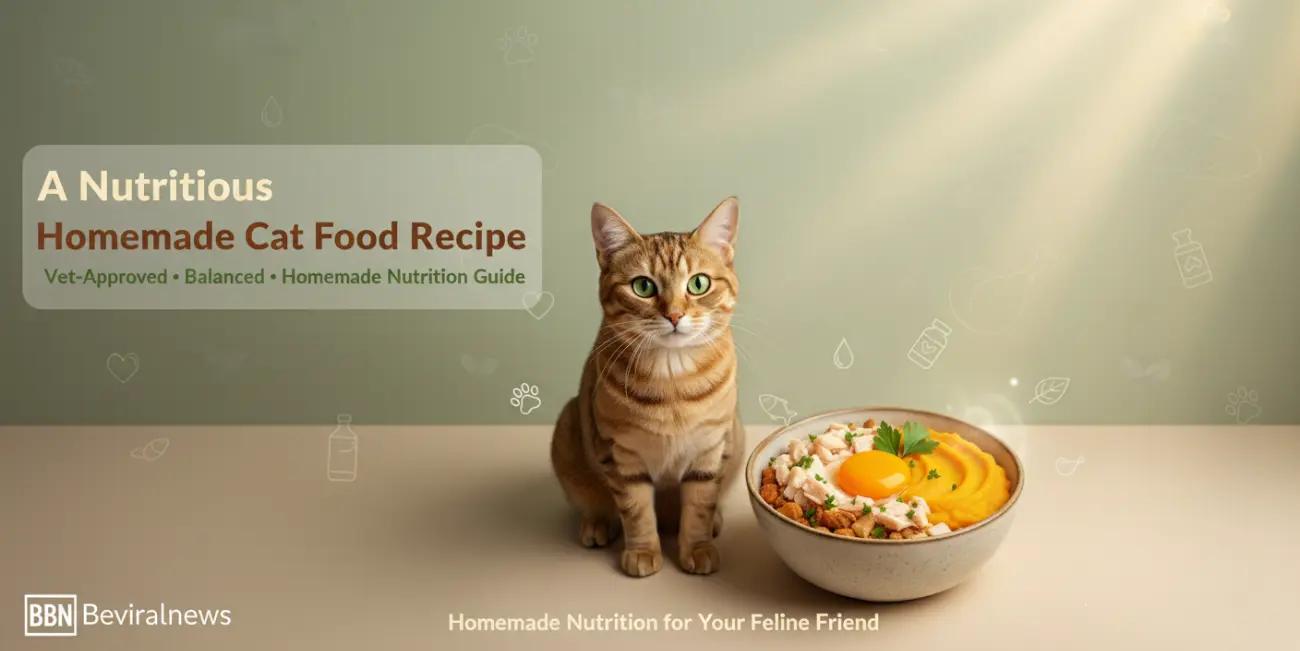
A Nutritious Homemade Cat Food Recipe may seem complicated at first, but with the right plan, ingredients, and nutrition balance, you can prepare delicious, healthy meals that keep your cat thriving — safely and easily.
Why Consider Homemade Cat Food?
Making homemade cat food gives you total control over what your cat eats. You choose the ingredients, the quality of the protein, and you can avoid fillers, artificial colors, and preservatives often found in store-bought foods.
Homemade cat food can also help cats with allergies, digestive issues, or picky appetites, since you can tailor recipes to their needs. However, formulating a truly balanced cat diet is not as simple as it looks. Cats have very specific nutritional requirements, and missing just one essential nutrient can lead to health problems.
That’s why it’s vital to follow proven, vet-approved recipes and use proper supplements to ensure your cat gets every nutrient they need.
Understanding Cat Nutrition: The Essentials
Cats Are Obligate Carnivores
Cats are obligate carnivores, which means they need nutrients that are only found in animal tissues. They rely on meat for:
- Taurine (for heart and eye health)
- Arachidonic acid (for skin and coat health)
- Vitamin A and D (in preformed versions only available in meat and organs)
They cannot thrive on plant-based or vegetarian diets. A homemade cat food recipe should always center around high-quality animal proteins such as chicken, turkey, rabbit, or beef.
Key Nutrients Cats Require
| Nutrient | Why It’s Important | Deficiency Risks |
| Taurine | Supports heart, vision, and immune health | Blindness, heart failure |
| Calcium & Phosphorus | Builds bones and teeth | Skeletal problems |
| Vitamin A, D, E | Aids immunity, vision, skin health | Weak immunity, vision loss |
| Omega-3 Fatty Acids | Supports coat, skin, brain | Dull coat, inflammation |
| Trace Minerals | Needed for metabolism | Growth and thyroid issues |
Cats also need the right balance between protein, fat, and minimal carbohydrates. A healthy cat food recipe should reflect their natural diet — mostly meat, moderate fat, and very little starch.
Step-by-Step: Homemade Cat Food Recipe (Cooked Version)
Here’s a balanced, cooked cat food recipe suitable for healthy adult cats.
Always consult your veterinarian before making major dietary changes.
Ingredients (makes about 7–8 servings)
- 1 kg (2.2 lbs) chicken thighs (boneless, skin optional)
- 100 g chicken liver
- 1 egg yolk
- ¼ cup cooked pumpkin (optional, for fiber and digestion)
- 1 cup water or unsalted bone broth
- Feline supplement premix (includes taurine, vitamins, minerals)
- 1 tsp fish oil (omega-3 source)
- Calcium supplement (if bones are not used)
Instructions
- Cook the meat and liver
Gently boil or bake until fully cooked but not overdone (to preserve nutrients).
- Chop or blend
Use a food processor to create a fine, moist texture that cats prefer.
- Mix in egg yolk and pumpkin
Add these while still warm, mixing thoroughly.
- Add supplements and broth
Stir in taurine, vitamins, fish oil, and calcium powder. Blend until evenly distributed.
- Portion and store
Divide into single-meal containers. Refrigerate for up to 3 days or freeze for up to 10 days.
Feeding Tips
- Feed about 200–250 kcal per day (adjust by your cat’s size and activity level).
- Transition slowly over 5–7 days, mixing homemade food with your cat’s regular food.
- Watch for changes in coat shine, stool, appetite, or energy — these are signs of diet success or imbalance.
- Schedule vet check-ups every 2–3 months after switching to homemade diets.
Advanced Insights: Raw & Prey-Model Diets
Some cat owners prefer raw diets or Prey Model Raw (PMR) feeding. These mimic a cat’s natural prey intake using an 80/10/10 ratio:
- 80% muscle meat
- 10% bone
- 10% organ (mostly liver)
While raw diets may preserve more nutrients, they carry bacterial risks (like Salmonella or E. coli). If you choose raw feeding, handle meat hygienically, freeze it properly, and work closely with a vet to ensure balance and safety.
Real-Life Example: Whiskers’ Transformation
When Sarah adopted Whiskers, her cat suffered from itchy skin and constant ear infections. After consulting her vet, she started a simple homemade diet using rabbit meat and supplements. Within six weeks, Whiskers’ skin cleared, her coat became shinier, and her digestion improved.
Homemade food gave Whiskers a new life — but it worked because Sarah followed a balanced, vet-reviewed recipe with proper nutrients.
Common Mistakes to Avoid
- ❌ Skipping supplements – causes nutrient deficiencies.
- ❌ Using too much liver or fat – leads to vitamin A toxicity or obesity.
- ❌ Feeding raw bones – can cause injury; only use ground bones if vet-approved.
- ❌ Sudden food switches – cause digestive upset.
- ✅ Regular vet monitoring – ensures your cat stays healthy on a homemade diet.
Frequently Asked Questions (FAQs)
Q1: Can cats eat vegetarian or vegan homemade food?
No. Cats are obligate carnivores and need nutrients that come only from meat. Vegetarian or vegan diets can lead to serious health issues.
Q2: How long can I store homemade cat food?
Store in the refrigerator for up to 3 days or freeze individual portions for up to 10 days.
Q3: Do I really need to add taurine?
Yes! Taurine is essential for heart and eye health. Always include it in any homemade recipe.
Q4: Can kittens eat this recipe?
Not this version. Kittens need higher protein, fat, and calcium levels. Use a vet-formulated recipe for growing cats.
Q5: What if my cat refuses homemade food?
Mix small amounts into their usual food, gradually increasing over a week. Some cats need time to adapt to texture or flavor changes.
Conclusion: A Smart Way to Feed Your Cat Naturally
Making nutritious homemade cat food is a loving and rewarding choice — as long as it’s done correctly.
Start simple, use vet-approved recipes, and include a balanced feline supplement to cover all essential nutrients. Over time, you’ll notice improvements in your cat’s energy, coat quality, and overall well-being.
✅ Take the Next Step
If you’re ready to nourish your cat naturally:
- Talk to your veterinarian or a certified pet nutritionist.
- Gather quality ingredients and supplements.
- Prepare your first batch using the recipe above.
Your cat depends on you for balanced, wholesome meals — and with care, knowledge, and consistency, you can give them the healthiest food possible right from your kitchen. 🐱💚