
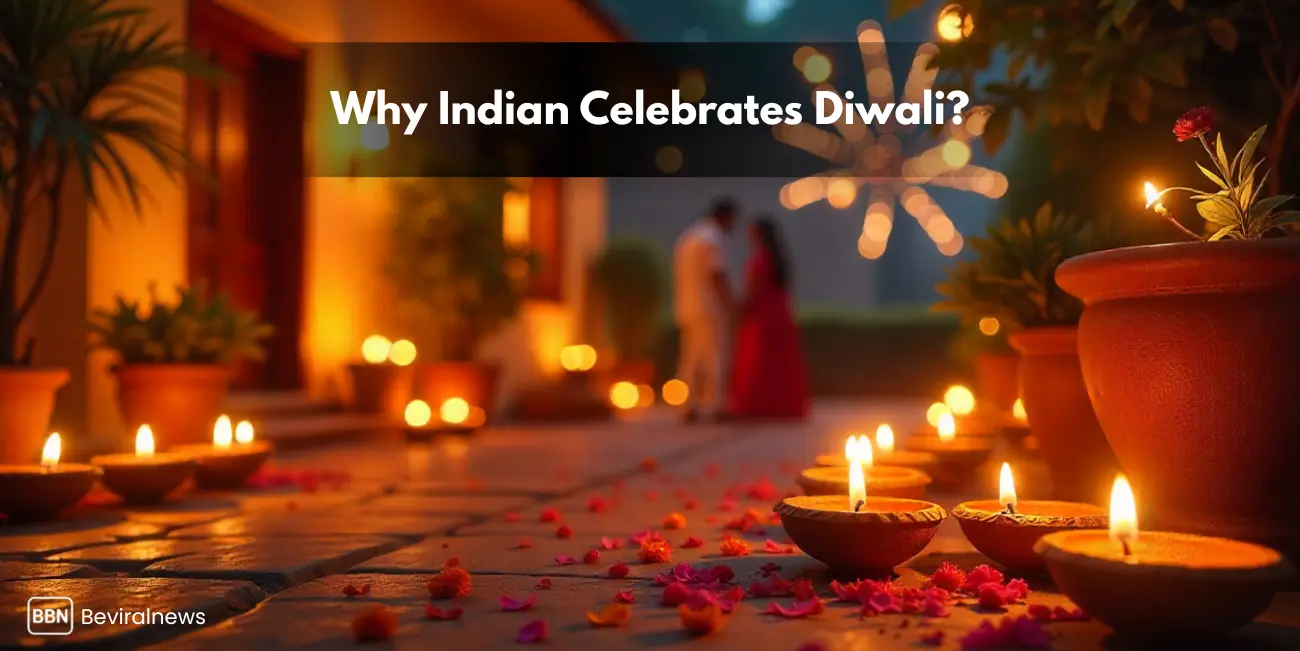
“Why Indians celebrate Diwali (or Deepavali)” may seem like a simple cultural question, but it unlocks a wealth of diverse spiritual victories, celebrating the universal triumph of light over darkness (Dharma over Adharma), good over evil, and knowledge over ignorance across different Indian traditions.
What is Diwali? A Beginner’s Explanation of the Festival of Lights
At its heart, Diwali is the Festival of Lights, a major Hindu, Jain, and Sikh festival that is one of the most widely celebrated occasions in India and by the Indian diaspora globally. The word itself, Deepavali, comes from the Sanskrit words Dipa (light or lamp) and Avali (a row or series), literally meaning a “row of lights.”
Celebrated over five to six days, the main Diwali night typically falls on the darkest new moon night (Amavasya) of the Hindu lunisolar month of Kartika (usually late October or early November in the Gregorian calendar). This timing, in the shift from autumn to winter, perfectly encapsulates the core message of the festival: dispelling the spiritual and physical gloom of darkness with the light of hope and prosperity.
The simplest answer to “Why is Diwali celebrated?” is this: It is a joyful affirmation of hope, justice, and the ultimate victory of goodness.
Key Symbols and Rituals (For Beginners)
For a first-time observer, the celebrations are a beautiful sensory experience centered on a few key elements:
- Lighting Diyas and Lamps: Millions of small earthen lamps (diyas), candles, and electric lights illuminate homes, temples, and streets.This is the festival’s most iconic ritual.
- Worship: The main day involves performing Lakshmi Puja, a prayer ceremony dedicated to Goddess Lakshmi (the deity of wealth and prosperity) and Lord Ganesha (the god of wisdom and the remover of obstacles).
- Feasting and Gifts: Families gather for elaborate feasts, exchange gifts (mithai – Indian sweets, and dry fruits), and wear new clothes.
- Decorations: Homes are thoroughly cleaned, renovated, and decorated with colorful floor patterns called Rangoli, made from colored rice, flour, or flower petals.
Deeper Insights: The Multiple Spiritual Victories of Diwali
For more experienced readers, understanding Diwali requires recognizing its diverse, geographically-specific, yet universally harmonized mythological origins. The festival is not tied to a single event but to several crucial narratives across different faiths and regions, all of which reinforce the core theme of Dharma (righteousness) prevailing over Adharma (unrighteousness).10 This is the key to its Semantic SEO value—using a variety of related terms and stories to capture broad search intent.
The Hindu Legends: Multiple Triumphs of Good
The main reasons Hindus celebrate Diwali are rooted in three major mythological victories:
1. The Homecoming of Lord Rama (North India)
The most popular narrative, especially in North India, links Diwali to the epic Ramayana. It celebrates the triumphant return of Lord Rama, his wife Sita, his brother Lakshmana, and the devoted Hanuman to their kingdom of Ayodhya after 14 years of exile and the defeat of the demon king Ravana.
- Anecdote: The people of Ayodhya were so ecstatic to see their beloved king return that they lined the entire path from the forest to the palace with thousands of earthen lamps (diyas) to light the darkest night of the year, symbolizing the end of a dark era and the beginning of Rama’s righteous rule (Rama Rajya). This is why lighting lamps is so central to the festival.
2. The Worship of Goddess Lakshmi (Pan-Indian/Business Community)
Across all of India, the central night of Diwali is dedicated to Goddess Lakshmi. The celebration signifies the welcoming of wealth and prosperity for the coming year.
- Significance: It is believed that on this day, Lakshmi emerged from the Samudra Manthan (the churning of the cosmic ocean). Therefore, cleaning and lighting one’s home is a way to invite the Goddess to bestow her blessings. The business community traditionally starts new account books on this auspicious day, linking Dhanteras (the first day of the five-day festival) to the purchase of gold, silver, or new utensils to signify the accumulation of wealth.
3. Lord Krishna’s Defeat of Narakasura (South India)
In South India, particularly, the second day of the festival, known as Naraka Chaturdashi or Choti Diwali, commemorates Lord Krishna’s vanquishing of the demon Narakasura, who had abducted 16,000 women and terrorized the world. This is a potent reminder that evil, no matter how powerful, will ultimately be defeated.
Jainism and Sikhism: The Light of Liberation and Freedom
Diwali’s significance extends beyond Hinduism, highlighting its role as a pan-Indian cultural anchor:
| Faith | Event Commemorated | Significance |
| Jainism | Mahavira Nirvana Divas | It marks the day that Mahavira, the 24th Tirthankara, attained moksha (final liberation) in 527 BCE. Jains light lamps to symbolically keep the light of his knowledge alive, emphasizing spiritual enlightenment. |
| Sikhism | Bandi Chhor Divas | It commemorates the day in 1619 when the Sixth Guru, Guru Hargobind, was released from Mughal imprisonment, along with 52 Hindu kings. The people of Amritsar lit the Golden Temple with hundreds of lamps to welcome him back, hence the name, the “Day of Release from Prison.” |
Step-by-Step Guide to the Five Days of Diwali
Diwali is a protracted celebration, a five-day calendar of rituals that builds anticipation and spiritual fervor. This detailed structure offers a clear guide, perfect for Answer Engine Optimization (AEO) queries about the celebration’s format.
1. Dhanteras (Day 1: The Day of Wealth)
- Focus: Worshipping Goddess Lakshmi and Lord Dhanvantari (the Hindu god of Ayurveda).
- Ritual: It is highly auspicious to purchase new items, especially gold, silver, or metal utensils, symbolizing a fresh cycle of wealth and prosperity entering the home.
2. Naraka Chaturdashi / Choti Diwali (Day 2: The Day of Cleansing)
- Focus: Lord Krishna’s defeat of Narakasura.
- Ritual: People perform an oil bath before sunrise, a ritual symbolizing the cleansing of the body and mind from the “dirt” of the previous year. Houses are lit with diyas for the first time, hence the name “Choti” (Small) Diwali.
3. Lakshmi Puja / Main Diwali (Day 3: The Day of Light)
- Focus: The main worship of Goddess Lakshmi and Lord Ganesha. The night is the darkest new moon, which is why maximum illumination is required.
- Ritual: Families gather to perform puja (worship), light countless diyas and candles to guide Lakshmi into the home, exchange gifts and sweets, and set off celebratory fireworks (often with modern restrictions for air quality, focusing on ‘green’ crackers).
4. Govardhan Puja / Annakut (Day 4: The Day of Devotion)
- Focus: Lord Krishna’s feat of lifting the Govardhan Hill to protect the villagers of Vrindavan from Lord Indra’s torrential rain.
- Ritual: In North India, devotees often create a miniature hill of food, called Annakut, made of sweets and vegetarian dishes, which is offered to the deities and then shared among the community.
5. Bhai Dooj / Bhai Tika (Day 5: The Day of the Sibling Bond)
- Focus: Celebrating the sacred relationship between brothers and sisters.
- Ritual: Similar to Raksha Bandhan, sisters apply a Tika (a colored mark) on their brothers’ foreheads and pray for their longevity and well-being, while brothers offer gifts in return, formalizing the end of the five-day festival.
Why Diwali Builds Trust and Unity: A Real-Life Example
Diwali’s power lies in its ability to build community and trust. It’s a massive national event that transcends religious boundaries, promoting a spirit of generosity, charity, and forgiveness.
- Social Proof: Think of the immense scale of the festival—every Indian community, from the smallest village to the largest city, engages in collective cleaning, decoration, and celebration. This unity sends a powerful message: Diwali is a trusted, time-honored tradition that millions have embraced for centuries.
- Real-Life Anecdote: In a bustling city like Mumbai, the entire city undergoes a pre-Diwali “spring cleaning.” Shops, businesses, and homes are deep-cleaned, painted, and renovated.This commitment to renewal, known as shubh shuruat (an auspicious beginning), is a concrete demonstration of hope—investing in your space to prepare for the blessings you are certain to receive. This collective investment creates a powerful sense of shared prosperity.
The act of lighting the diya is a deeply personal trust signal—you are not just lighting a lamp for decoration; you are lighting a symbol of your inner wisdom and your confidence that the light of goodness will always return.
FAQs:
What is the primary spiritual meaning of Diwali?
The primary spiritual meaning of Diwali is the victory of light over darkness, or the triumph of knowledge, hope, and goodness over ignorance, despair, and evil. It is a time for inner reflection and renewal.
What is the most important day of the Diwali festival?
The most important day of the Diwali festival is the third day, which is the night of Lakshmi Puja.This is the day when families perform the main worship of Goddess Lakshmi and light the most diyas and lamps.
Why do people clean their homes before Diwali?
People thoroughly clean and renovate their homes before Diwali because it is believed that Goddess Lakshmi, the deity of wealth, visits only clean and well-lit homes.The cleaning symbolizes purifying the self and the environment to welcome blessings.
Which Hindu deity is primarily worshipped on Diwali?
The primary deity worshipped on the main day of Diwali is Goddess Lakshmi, the deity of wealth and prosperity, along with Lord Ganesha, the remover of obstacles.
Is Diwali celebrated by non-Hindus?
Yes, Diwali is celebrated by Jains as Mahavira Nirvana Divas and by Sikhs as Bandi Chhor Divas.It is widely considered a national cultural festival enjoyed by almost all Indians regardless of faith.
Conclusion: Embrace the Light, Embrace Your Future
Diwali is more than just a festival of lights; it is a profound declaration of authority and hope.It is your annual moment to clear out the darkness of the past year—the negativity, the doubt, the financial worries—and light a confident path toward a brighter future.
The collective joy, the rich traditions, and the shared belief in the power of light make this an unbeatable cultural phenomenon. You don’t just celebrate Diwali; you embody its spirit of triumph and renewal.
Take the next step: If you’re ready to invite prosperity and wisdom into your life, start by embracing the core message of the festival. Cleanse your space, illuminate your intentions, and choose to operate from a place of light and goodness. By taking this conscious, confident action, you are aligning yourself with the millions who have found profound success and happiness through the ancient, powerful tradition of Diwali.