
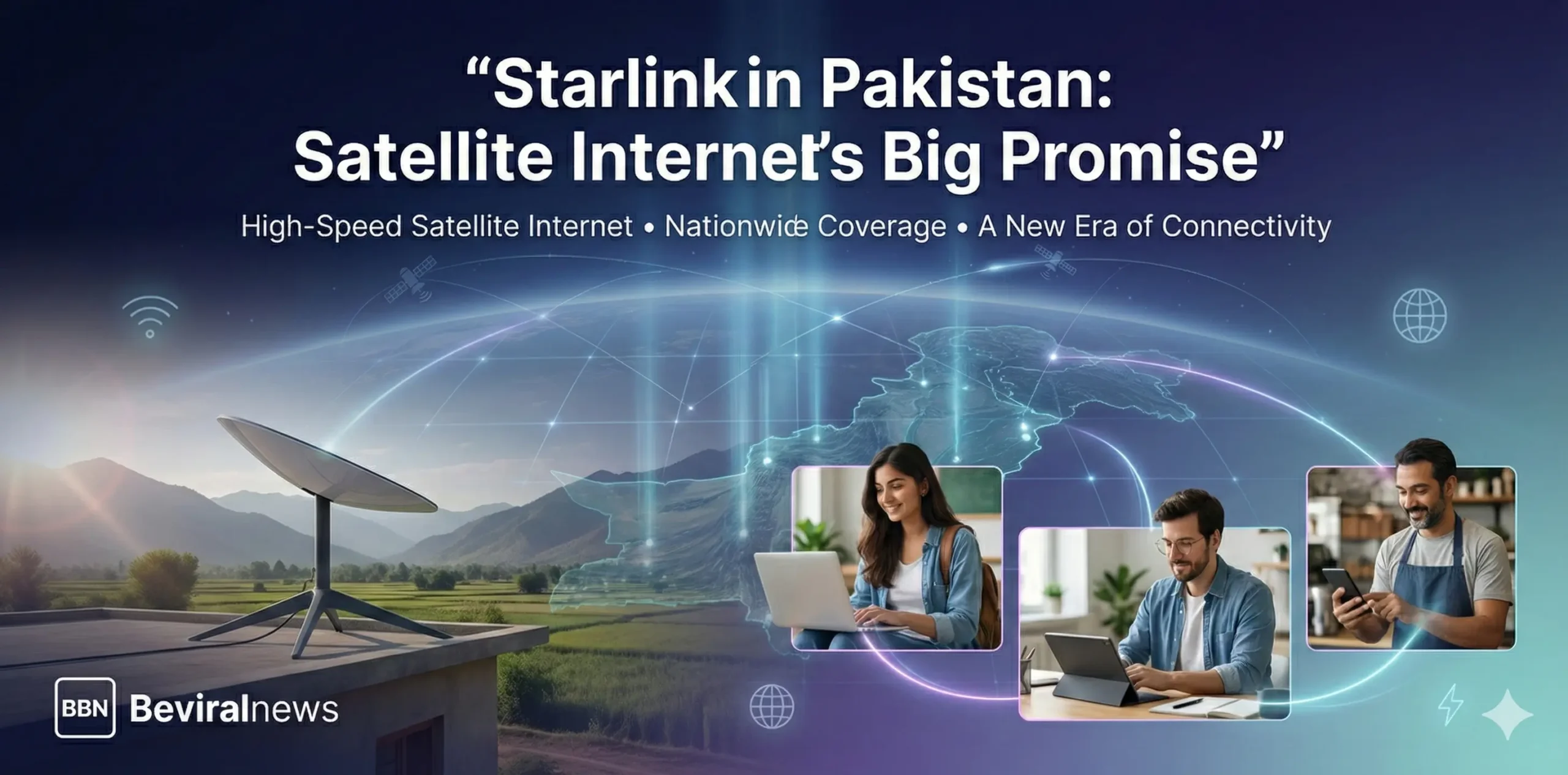
Starlink in Pakistan: Satellite Internet’s Big Promise might sound like a technical breakthrough, but beneath the surface lies the real chance to transform connectivity for millions who’ve long been stuck with slow, unreliable internet. With the right plan and clear expectations, you could be among the first to experience a truly fast, border-defying internet — and most people don’t even realize how close that future really is.
This article breaks down why this matters — even if Starlink isn’t fully live yet — and how it could reshape the internet in Pakistan as we know it.
Introduction: The Connectivity Pain Point That Refuses to Go Away
Picture this: You’re trying to join an important video interview at 10 a.m., but your upload keeps dying, Zoom lags, and your browser spins forever. Or maybe you’re a student living outside Lahore or Islamabad, expected to attend online classes, but your connection makes a 15-minute lesson feel like a trial of patience.
Sound familiar? That’s Pakistan’s everyday reality.
For years, millions have struggled with limited broadband options, bandwidth caps, patchy performance, and slow speeds — especially outside major cities. Satellite internet has been a distant dream here, until now.
Here’s what you’ll discover:
- What Starlink really is and how it differs from traditional internet.
- Why Starlink’s arrival in Pakistan is such a big deal.
- What speeds, coverage, and costs you can expect.
- The regulatory & real-world challenges ahead.
- How to decide if Starlink is right for your home or business.
By the end, you’ll understand not just the “what,” but the why — and what it could mean for your digital life.
What Is Starlink?
At its core, Starlink is satellite internet powered by a network of thousands of satellites orbiting the Earth at low altitude. Instead of relying on underground fiber or cell towers, Starlink beams internet directly from space to dishes installed at homes and offices.
This isn’t generic satellite internet from the 2000s. Starlink’s architecture enables:
- Faster speeds and lower latency than older satellite internet.
- Nationwide coverage — as long as the sky is clear.
- Broad accessibility — especially in areas where fiber and 4G/5G fail.
Globally, users have seen download speeds ranging from 50 to 500+ Mbps, with latency often in the 20–40 ms range — good for video calls and gaming.
In essence: Starlink acts like a global internet umbrella — one that stretches over cities, villages, mountain valleys, and plains alike.
Why Starlink’s Arrival Matters for Pakistan
1. A New Hope for Rural & Underserved Regions
Pakistan’s digital divide is stark. While cities like Karachi and Lahore enjoy multiple ISP options with fiber broadband, rural regions often have only intermittent mobile data or slow DSL. Fixed broadband penetration is below 1%, with most people relying on mobile internet.
Starlink could fill that gap — giving people in remote valleys or desert districts consistent access to high-speed internet without the need for costly ground infrastructure.
2. Speed and Stability That Beats Mobile Data
Traditional broadband providers in Pakistan offer a wide range of speeds:
- Fiber: up to ~250 Mbps in cities.
- DSL/cable: 2–100 Mbps depending on area.
Starlink’s potential speeds (50–250+ Mbps) compete well — and in places where fiber doesn’t exist, there’s simply no comparison.
3. Economic & Social Empowerment
Stable internet isn’t a luxury — it’s an economic engine:
- Remote workers and freelancers can join global marketplaces.
- Small businesses can sell online and communicate globally.
- Students can access courses and e-libraries.
- Healthcare delivery (telemedicine) becomes possible in areas without clinics.
This isn’t theory — it’s a real world multiplier for livelihoods.
4. Resilience in Emergencies
Unlike ground networks that can be severed in floods or earthquakes, satellite internet can keep working where traditional infrastructure fails. This could be a game-changer in disaster response contexts.
How Does Starlink Actually Work?
Here’s a user-friendly analogy:
Think of traditional broadband like a road network — it requires physical infrastructure (cables, towers, fiber lines).
Starlink is like aerial transport — reaching places roadbuilders may never get to.
The Key Components:
- The Satellites
Hundreds of low-orbit satellites create a web of coverage around the globe. - The Dish (User Terminal)
A small, roof-mounted satellite dish at your home communicates with the satellites overhead. - The Router
This device turns the satellite signal into Wi-Fi for your devices.
Once installed, your equipment talks directly to space and brings internet inside your home — no local fiber required.
Where Starlink Stands in Pakistan: Current Status (2025)
As of late 2025:
Progress Made
- Starlink received a temporary No Objection Certificate (NOC) from Pakistan’s telecom regulators.
- Industry observers expect a full launch by late 2025 (around November–December), pending final approvals.
Pending Requirements
- Starlink still needs full licensing and security clearance from Pakistan’s regulatory bodies.
- Some regulatory concerns stem from how Starlink bypasses traditional national gateways, creating debates about content filtering, lawful interception, and national security.
Availability Today
At the moment, Starlink isn’t commercially operational for most Pakistanis. It is listed as “coming soon,” and while pre-orders or deposits may be possible, the service isn’t fully live yet.
In short: It’s close — but not fully here yet.
What Speeds and Coverage You Can Expect
Starlink’s performance has become well-documented globally — and Pakistan’s expectations reflect that trend.
Typical Expected Speeds
- Residential: approx. 50–250 Mbps download speed.
- Business: up to 500 Mbps or more.
- Latency: often 20–40 ms — much lower than traditional satellite internet.
These speeds are competitive with many fiber plans — and superior to 3G/4G in many rural contexts.
Coverage
Starlink doesn’t depend on local infrastructure — if your dish can “see” the sky, you can connect. This is huge for mountainous terrain and remote districts.
Starlink vs. Traditional Internet Services in Pakistan
| Feature | Starlink | Local ISPs (Fiber/DSL) |
| Coverage | Near-global via satellite | Mostly urban areas |
| Speed | 50–500 Mbps | Up to ~250 Mbps |
| Latency | ~20–40 ms | ~5–30 ms (fiber) |
| Installation | Dish + router (no ground network) | Requires cable or infrastructure |
| Cost | Higher | Lower |
| Mobility | Possible (mobility plans) | Fixed |
Best Fit
Starlink — remote areas, underserved regions, mobility needs.
Fiber ISPs — dense urban centers, budget-conscious customers.
Expected Costs in Pakistan (Estimates as of 2025)
There are multiple reported price ranges, since Starlink’s official Pakistan pricing hasn’t been finalized. Sources vary, but estimates converge around these figures:
Typical Expected Pricing
- Residential setup: ~PKR 110,000 hardware cost.
- Monthly fee: ~PKR 35,000 for home plans.
- Business plans: ~PKR 95,000/month with higher hardware cost.
Note: Some local industry reports have suggested lower price ranges based on early predictions, but these figures are generally seen as less likely once official launch pricing is set.
Reality Check
Compared to fiber internet (often PKR 2,000–12,000/month), Starlink is expensive. But for areas with no competitive alternative, it may be the only realistic solution.
Why It’s Expensive — And How That Could Change
Starlink costs more because:
- High Technology Costs
Space-launched infrastructure isn’t cheap. - Hardware Requirements
The dish and receiver must be satellite-grade. - Regulatory & Import Costs
Taxes, licensing, and customs can push prices higher.
But there’s reason for optimism:
- In other countries, Starlink has introduced lower-cost plans over time.
- Partnerships with local firms have helped reduce hardware costs.
- Volume adoption often drives down prices.
If Pakistan follows a similar pattern, we could see more affordable options emerge.
Real-World Challenges and Concerns
1. Regulatory Uncertainty
The PTA and other bodies are still finalizing Starlink’s operating license. Until that happens, commercial rollout remains pending.
2. Content Regulation
Because Starlink connects directly to satellites rather than local gateways, it raises questions about how content filters and monitoring systems work.
3. Economic Accessibility
For many households, Starlink’s cost — often several times higher than current broadband — may be prohibitive.
4. Weather Sensitivity
Like all satellite internet, connectivity performance can dip in severe weather, though modern Starlink systems are resilient.
Who Starlink Is Really For (and Who It Isn’t)
Best Fit
People in remote or rural areas with no fiber or reliable mobile internet.
Freelancers and remote workers needing stable broadband.
Small businesses and clinics without existing broadband options.
Anyone needing the internet in disaster scenarios.
Not Ideal
Urban users with access to cheap fiber broadband.
Budget-conscious users who prioritize cost over speed.
Users expecting fiber-like latency for ultra-competitive gaming.
A Step-by-Step Plan to Prepare for Starlink in Pakistan
1. Assess Your Current Internet Pain Points
List exactly what you need: speeds, reliability, coverage, budget.
2. Watch Regulatory Updates
Keep an eye on PTA announcements and official Starlink availability maps.
3. Consider a Community Approach
If individual subscription is high, shared community access hubs could distribute costs.
4. Plan for Installation
Starlink installation requires a clear view of the sky — make sure your rooftop or approved site is suitable.
5. Reassess After Launch
Once priced officially, compare offering with local ISPs before committing.
Frequently Asked Questions
1. Is Starlink available in Pakistan right now?
Short answer: Not fully — Starlink hasn’t launched commercial service yet in Pakistan, though it’s expected by late 2025 once licensing and security approvals are complete.
2. How fast could Starlink internet be in Pakistan?
Starlink’s expected speeds in Pakistan range from about 50 to 250+ Mbps, with potential for higher speeds on business plans, and latency lower than legacy satellite internet.
3. Will Starlink be cheaper than fiber broadband?
No — Starlink is likely to be pricier than most local fiber options. But its value lies in availability and reach where no fiber exists.
4. Why is Starlink delayed in Pakistan?
Regulatory hurdles, security clearances, compliance with national space policy, and content regulation concerns have slowed full licensing.
5. Can Starlink work everywhere in Pakistan?
Once launched, Starlink’s satellite coverage means it can work across the country — rural, urban, and mountainous regions alike — as long as the dish has a clear sky view.
6. What’s the biggest benefit of Starlink?
Its ability to deliver high-speed, reliable internet anywhere, which could close Pakistan’s digital divide and unlock economic opportunities in underserved regions.
Conclusion: The Internet Revolution at Pakistan’s Doorstep
Starlink represents more than just another ISP option — it’s a potential leap into a new era of connectivity for Pakistan.
For the first time, millions of people currently sidelined by weak infrastructure could access truly fast internet. That could mean:
- Better education opportunities.
- More jobs in the digital economy.
- Reliable telehealth and emergency communications.
- New pathways for business and innovation.
Yes, there are regulatory and cost challenges — but the horizon looks promising.
Now that you know how Starlink could reshape internet in Pakistan, don’t just scroll — watch the launch developments, plan for your connectivity future, and be among the first to benefit when the satellites go live.
Great read! 🌐
This piece highlights how Starlink’s satellite internet could transform connectivity in Pakistan, especially in remote and underserved areas, by offering high-speed internet where traditional networks don’t reach. It also wisely points out the real challenges — like regulatory hurdles, licensing issues, and the high cost that could limit access for many users. Overall, an insightful look at both the promise and practical barriers of bringing Starlink to Pakistan.