Summary
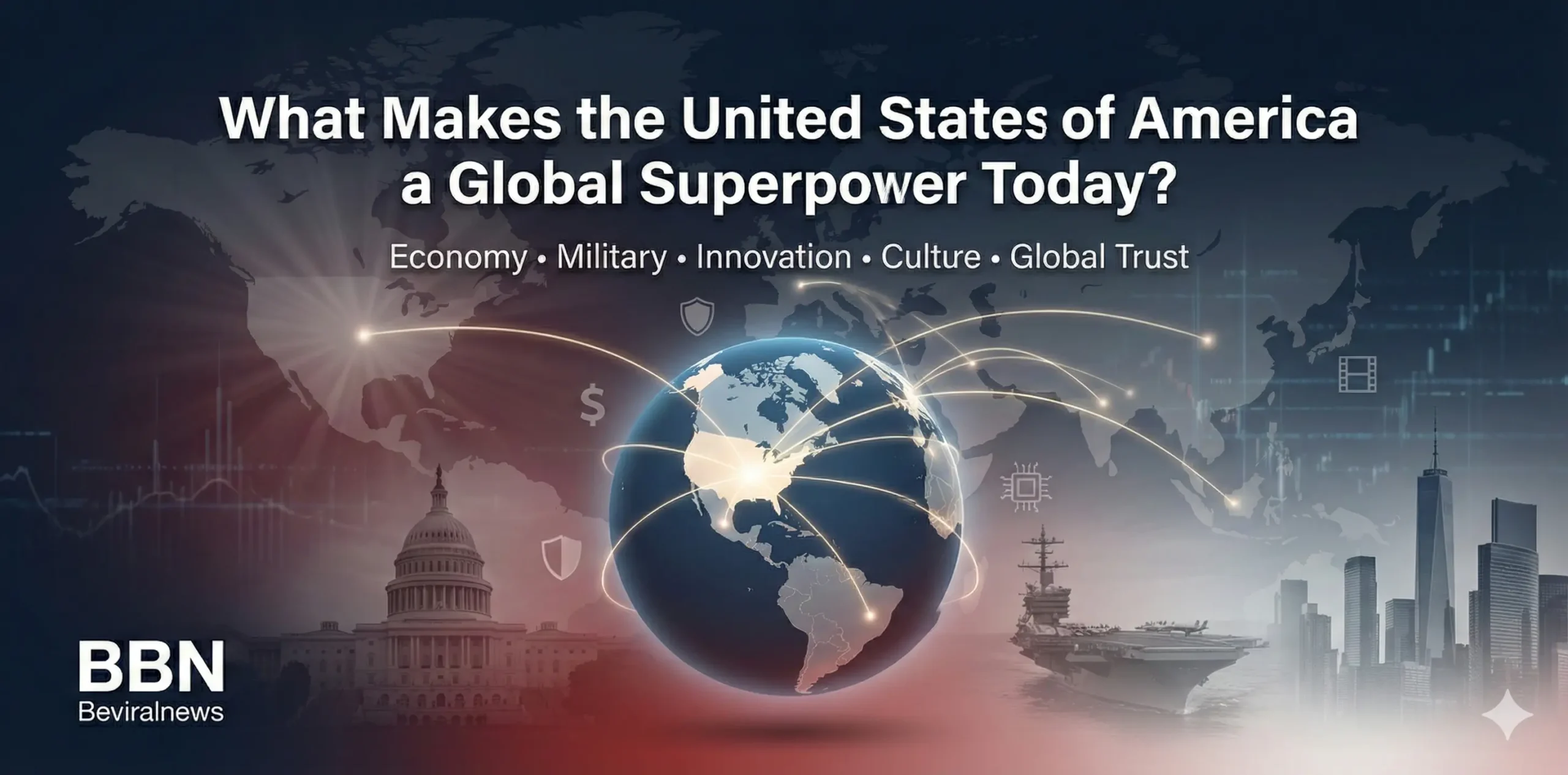
What makes the United States of America a global superpower today isn’t just its military or money — it’s the rare combination of influence, innovation, and trust built over decades. Beneath the headlines lies a deeper system of power that shapes economies, cultures, and global decisions every single day. Once you understand how it all connects, you’ll never look at the USA’s role in the world the same way again.
Why This Question Still Matters
Have you ever noticed how news from the United States of America seems to ripple across the entire world — affecting markets in Asia, conflicts in Europe, or technology trends everywhere?
That’s not an accident.
I’ve spent over a decade analyzing global power dynamics, and one thing becomes clear fast: many people think they understand why the USA is powerful — but most only see the surface. Military size. Big economy. Hollywood. Silicon Valley.
Those are real — but they’re not the whole story.
The real reason the United States of America remains a global superpower is far more layered, human, and interconnected than most headlines suggest.
Here’s what you’ll discover in this guide:
- The real pillars of American power (beyond clichés)
- Why trust and alliances matter more than raw force
- How culture, technology, and psychology shape global influence
- What the future holds for the USA as a superpower
Let’s pull back the curtain.
What Does It Actually Mean to Be a “Global Superpower”?
Before we go deeper, let’s clarify something most articles skip.
A global superpower isn’t just a strong country. It’s a nation that can:
- Influence global politics and security
- Shape the world economy
- Lead technological and cultural trends
- Project power and persuasion across continents
Only a handful of countries in history have met all these conditions at once.
Today, the United States of America stands alone in meeting every one of them simultaneously.
The Economic Engine That Powers the World
Why the U.S. Economy Still Sets the Global Pace
Here’s the short answer — money moves power, and the USA controls more of the world’s economic flow than any other nation.
The United States of America has the largest nominal GDP in the world, accounting for roughly a quarter of global economic output. But size alone isn’t the secret.
What truly matters is reach.
- The U.S. dollar is the world’s primary reserve currency
- Global trade, oil pricing, and debt markets rely on it
- Financial shocks in the U.S. echo worldwide
This gives the USA a unique advantage: economic decisions made in Washington or New York can impact households across the globe.
According to the U.S. Federal Reserve and IMF data, over 58% of global reserves are still held in U.S. dollars.
That’s influence you can’t fake.
Wall Street, Innovation, and Capital Gravity
Capital follows confidence — and confidence still flows toward the United States of America.
- Wall Street remains the world’s financial nerve center
- U.S. capital markets are the deepest and most liquid globally
- American venture capital fuels innovation everywhere
When global uncertainty rises, investors don’t ask where to go — they ask how fast they can move into U.S. assets.
That’s economic trust in action.
Military Power: More Than Just Firepower
How the U.S. Military Shapes Global Stability
Yes — the USA has the most powerful military on Earth. But here’s what most people miss:
Its real strength lies in global presence, not aggression.
- Over 700 overseas military bases
- Defense partnerships across NATO, Asia, and the Middle East
- Advanced intelligence, logistics, and cyber capabilities
This allows the United States of America to respond faster, deter conflicts, and stabilize regions before crises escalate.
According to the U.S. Department of Defense, no other country can project force globally at this scale.
Why Alliances Multiply American Power
Power shared wisely becomes power multiplied.
The USA doesn’t stand alone — it leads:
- NATO
- Strategic partnerships in Japan, South Korea, Australia
- Intelligence-sharing networks like Five Eyes
This alliance system is something rivals struggle to replicate.
Military strength plus trusted partners equals lasting superpower status.
Technology and Innovation: America’s Quiet Advantage
Silicon Valley Isn’t Just About Apps
Innovation is influence — and the United States of America dominates the innovation economy.
From artificial intelligence to semiconductors, biotechnology, aerospace, and defense technology, most foundational breakthroughs still originate from U.S. research institutions, startups, and universities.
According to data from the National Science Foundation, the USA leads the world in research funding and high-impact innovation.
Universities, Talent, and Brain Gain
Here’s a truth rarely said out loud:
The world sends its brightest minds to the United States of America.
- Top universities attract global talent
- Immigrant entrepreneurs build trillion-dollar industries
- Research ecosystems turn ideas into reality
This “brain gain” keeps the USA years ahead in critical sectors.
Cultural Influence: The Soft Power Nobody Escapes
Why American Culture Travels So Easily
You don’t need soldiers to influence minds — you need stories.
Hollywood, music, sports, social media, and brands all carry American values and narratives worldwide.
Whether people love or criticize the USA, they pay attention.
That’s soft power — and it’s incredibly hard to measure, but impossible to ignore.
English, Media, and Global Conversation
The United States of America also shapes how the world communicates:
- English as the global business language
- U.S.-based media platforms shaping discourse
- American norms influencing global pop culture
When ideas spread fastest through U.S. channels, influence follows naturally.
Political Power and Global Institutions
How the USA Shapes International Rules
The United States of America helped build the modern global system after World War II — and still plays a central role in it.
This includes the United Nations, World Bank, International Monetary Fund, and World Trade Organization.
Even when challenged, U.S. participation legitimizes global action.
No other country has this level of institutional gravity.
Democracy, Debate, and Global Visibility
America’s political system is messy — and that’s part of its power.
Open debate, visible elections, and public accountability create global transparency. While imperfect, this openness builds trust over time.
People don’t just watch what America does — they watch how it argues, reforms, and adapts.
Why Geography Still Favors the United States
Sometimes power is physical.
The United States of America benefits from extraordinary geography:
- Two ocean buffers
- Friendly neighbors
- Vast natural resources
- Navigable rivers and internal trade routes
This allows economic growth and security without constant existential threats.
Geography quietly supports everything else.
The Hidden Psychological Factor: Perception and Confidence
Why People Still Believe in American Leadership
Power isn’t only measured — it’s perceived.
Even critics often use U.S. systems, rely on U.S. security guarantees, and invest in U.S. markets.
That belief reinforces reality.
As long as the world sees the USA as capable of leadership, its influence remains self-sustaining.
Challenges the United States of America Faces Today
No honest strategist ignores this part.
The USA faces rising competition from China, political polarization, economic inequality, and trust erosion abroad.
But here’s the key difference:
The United States of America has a proven ability to self-correct.
Adaptability — not perfection — is what keeps superpowers alive.
What Happens If the USA Stops Leading?
History gives us a clue.
When global leadership vacuums appear, markets destabilize, conflicts escalate, and rules fracture.
Whether welcomed or resisted, U.S. leadership still anchors global order.
The real question isn’t if America leads — but how wisely it chooses to do so.
Frequently Asked Questions
Is the United States of America still the only global superpower?
Yes — because it uniquely combines military, economic, technological, and cultural dominance at a global scale. Other nations may rival in one area, but not all simultaneously.
Why is the U.S. dollar so powerful?
Here’s the short answer — global trust and stability. Most international trade and reserves rely on the dollar because of U.S. financial credibility and scale.
Can another country replace the USA as a superpower?
Most people think it’s inevitable — but the truth is superpower status depends on systems, alliances, and adaptability, not just GDP or population.
Does military power alone make a country a superpower?
No. Military force without economic, cultural, and diplomatic influence rarely lasts. The USA’s strength comes from balance.
Is American power declining?
It’s evolving, not disappearing. Relative influence shifts, but core advantages remain deeply embedded.
Final Thoughts: Why This Still Matters to You
Understanding what makes the United States of America a global superpower today isn’t just about geopolitics — it’s about recognizing how interconnected your life is with global systems.
From the phone in your pocket to the stability of markets, American influence touches more than most people realize.
Now that you see how it really works, don’t just scroll away.
Pay attention. Question narratives. And stay curious — because global power shapes the future we all share.
Want to explore deeper? See how these systems affect your industry, investments, or worldview — you might be surprised how close to home it feels.