
Summary:
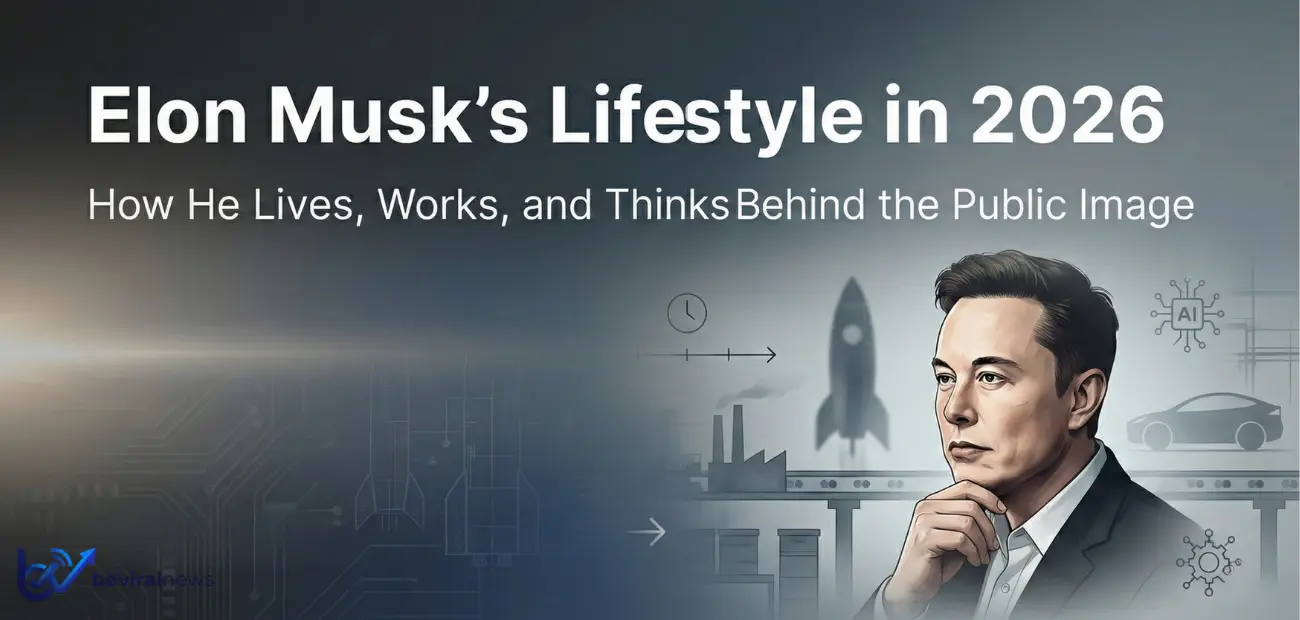
Elon Musk’s lifestyle in 2026 is built around extreme time compression, minimalist personal choices, and relentless work prioritization.
He designs his life to reduce friction, not to increase comfort.
Understanding how he lives explains why his productivity model works for him—and why it often fails when others try to copy it.
Why This Matters
Many people admire Elon Musk’s output but misunderstand the lifestyle that enables it. Online advice often reduces his life to “work 100 hours a week” or “sleep at the office,” which misses the deeper structural decisions behind those habits.
For students, remote workers, and professionals, copying surface-level routines usually leads to burnout, not results.
This guide explains exactly what works, what doesn’t, and how to choose correctly.
How Elon Musk Actually Structures His Daily Routine
Elon Musk’s daily routine in 2026 is not fixed—it is priority-driven.
His schedule is built around mission-critical problems, not rigid time blocks.
In real-world use, days are divided by company urgency. SpaceX launch windows or Tesla production issues take priority over everything else. Lower-impact meetings are compressed, delayed, or removed entirely.
What most people miss: he deliberately reduces decisions outside of work so mental energy stays focused on engineering and strategy.
Limitation: this structure only works when someone controls their calendar. Employees without decision authority cannot fully replicate it.
Why Elon Musk’s Minimalist Lifestyle Is Strategic, Not Aesthetic
Elon Musk’s minimalist lifestyle is about speed, not image.
He owns few homes, wears similar clothing, and avoids lifestyle complexity by design.
A common mistake is assuming minimalism equals comfort or simplicity. In Musk’s case, it supports rapid movement between factories, launch sites, and offices.
Practical example: living close to work sites reduces commuting friction during high-pressure cycles.
Who this works for
- Founders
- Operators
- Contractors with location flexibility
Who it doesn’t
- Professionals who rely on stability
- Roles where routine environments improve performance
Work Habits That Enable His Output (and Their Hidden Costs)
Elon Musk’s work habits focus on first-principles thinking and direct involvement.
He often bypasses management layers to inspect problems firsthand.
Most users notice this increases speed—but it also introduces chaos. Teams must adapt quickly to changing priorities and direct feedback.
Clear recommendation: adopt the thinking model, not the control style.
First-principles reasoning scales. Micromanagement does not.
Warning: without deep technical understanding, copying this habit creates bottlenecks instead of breakthroughs.
How He Thinks About Productivity in 2026
Elon Musk’s productivity mindset prioritizes impact per hour, not balance.
He measures success by progress toward long-term goals, not daily comfort or consistency.
In practice, this means sacrificing leisure during critical phases and recovering later—sometimes only partially.
Common mistake: assuming constant intensity is sustainable.
Musk’s model includes burn cycles followed by partial withdrawal.
Decision filter: this mindset fits people optimizing for legacy-level outcomes, not lifestyle optimization.
The Reality of Elon Musk’s Personal Life
Elon Musk’s personal life in 2026 remains compartmentalized.
Relationships, parenting, and public presence exist alongside—but not above—his work priorities.
This is not endorsement or criticism. It is a trade-off.
Balanced view:
- Pro: singular focus enables rare execution speed
- Con: personal instability and long-term strain increase
Most professionals should treat this as context, not a blueprint.
Net Worth vs. Lifestyle: Why Wealth Hasn’t Changed His Habits
Despite Elon Musk’s net worth reaching historic levels, his daily lifestyle remains restrained.
Wealth functions as leverage, not consumption fuel.
Practical insight: money is reinvested into high-risk ventures rather than personal upgrades.
Limitation: this only works when someone is emotionally detached from material validation.
When Elon Musk’s Lifestyle Model Works and When It Fails
It works when
- The mission is clearly defined
- Authority matches responsibility
- Technical competence is high
It fails when
- Copied by people without leverage
- Used as motivation instead of structure
- Health, family, or mental limits are ignored
This is where most advice breaks down.
Who Should Learn From This and Who Should Avoid It
This is useful for
- Founders and builders
- Engineers with decision power
- High-agency professionals
This should be avoided by
- Early-career workers without control
- People seeking work-life balance
- Anyone who equates suffering with success
Selective learning matters more than imitation.
Common Mistakes People Make When Studying Elon Musk’s Lifestyle
- Copying work hours instead of prioritization logic
- Ignoring recovery and support systems
- Confusing visibility with productivity
Most failures come from surface-level mimicry.
FAQ
Does Elon Musk still work extreme hours in 2026?
Yes. During critical phases, intensity spikes. Outside those periods, workload fluctuates.
Is Elon Musk’s minimalist lifestyle intentional?
Yes. It is designed to reduce friction and decision fatigue.
Can average professionals copy his daily routine?
Not directly. Structural differences make full replication unrealistic.
Does wealth influence his personal lifestyle choices?
Very little. Wealth is treated as a tool, not a reward.
Is his productivity mindset sustainable long-term?
Only with authority, purpose alignment, and periodic withdrawal.
Final Takeaway
Elon Musk’s lifestyle in 2026 is not about discipline or sacrifice—it is about structural optimization around a singular mission.
The real lesson is not how long he works, but how aggressively he removes friction from decisions that matter most.
With a clear understanding of how this works, readers can now choose the elements that actually fit their goals—without guesswork.