
Summary
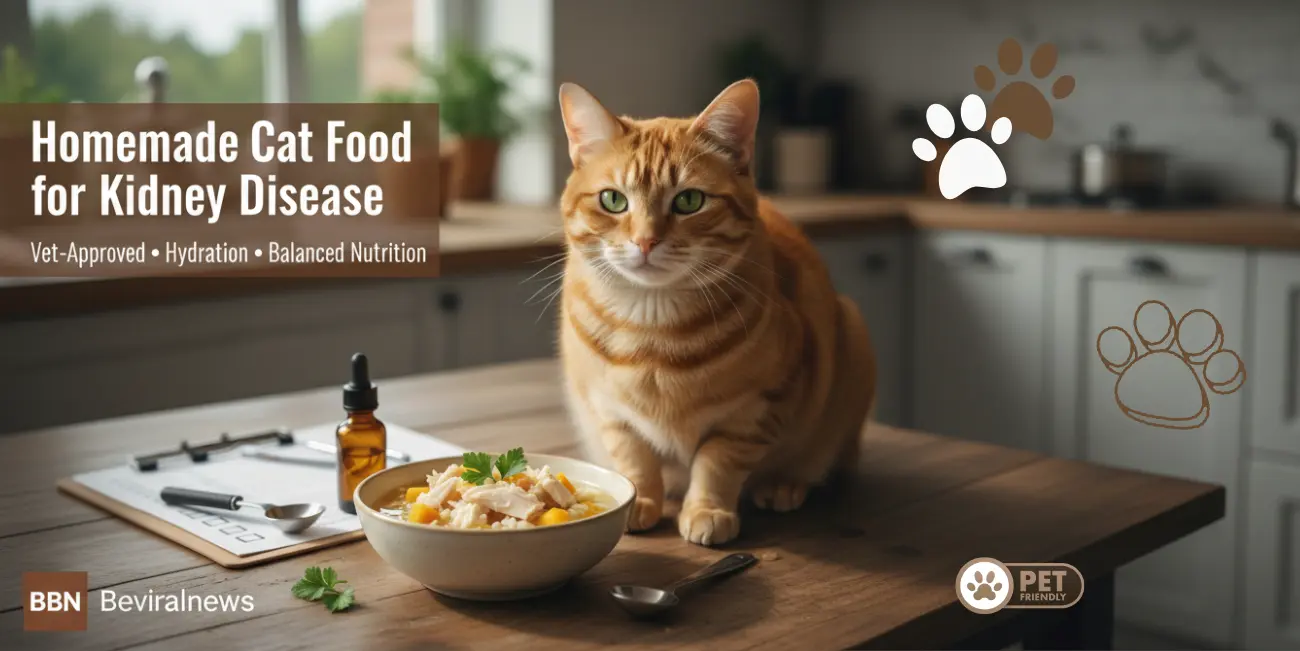
Homemade cat food for kidney disease may seem challenging, but with the right plan and veterinary guidance, you can create a safe, supportive diet that helps your feline friend feel better and supports their renal health.
What is kidney disease in cats — and why diet matters
When a cat develops Chronic Kidney Disease (CKD), their kidneys gradually lose the ability to filter waste products, regulate minerals and fluid balance, and maintain overall metabolic stability.
Because of this, diet becomes one of the most important tools in managing kidney disease:
- A “kidney-support” diet for cats typically has reduced phosphorus and sodium, and moderately reduced or high-quality protein, plus higher potassium and omega-3 fatty acids.
- Cats with CKD often lose appetite, muscle mass, and can become dehydrated. Ensuring they eat enough and get moisture is as vital as restricting certain nutrients.
- Importantly: homemade diets can work, but they must be balanced, tailored and ideally formulated or reviewed by a veterinary nutritionist. Many home-prepared diets did not meet recommended nutrient allowances.
In short: diet isn’t a “cure,” but for cats with kidney disease it is a strategic, controlled tool to slow progression, improve quality of life, and maintain body condition.
Can you safely make homemade cat food for kidney disease?
Yes — but with caution, proper formulation, and close veterinary supervision. Let’s break it down into beginner and advanced perspectives.
For beginners: key nutritional principles
If your cat has been diagnosed with kidney disease and you’re considering homemade food, here are foundational guidelines:
- Controlled phosphorus: Since diseased kidneys can’t remove phosphorus well, high levels accelerate damage.
- Sodium moderation: Lower sodium helps prevent raised blood pressure and further kidney stress.
- Protein: quality, not necessarily very low: While older thinking advocated very low protein, current guidance emphasises high-quality digestible protein, balanced to avoid muscle wasting.
- High moisture: Cats with CKD lose more water in urine, so a wet diet or adding extra liquid helps keep them hydrated and supports kidneys.
- Omega-3 fatty acids and other supportive nutrients: These help reduce inflammation and oxidative stress.
- Palatability & eating enough: The best diet is the one your cat will eat. For CKD cats, refusal is a serious risk.
Advanced insights: fine tuning and potential pitfalls
If you (or your vet/nutritionist) are ready to dive deeper:
- Staging matters: The nutritional needs differ depending on whether your cat is in early, moderate or advanced stages of CKD. Some cats in early stages don’t need severe protein restriction.
- Balanced homemade diets are hard to craft: Many homemade recipes don’t meet required nutrients such as choline, selenium, zinc, calcium.
- Vegetables/carbs caution: Many homemade diets for CKD cats include rice, pumpkin, squash etc — but for obligate carnivores like cats, these may dilute essential nutrients and introduce other issues.
- Phosphate binders, supplements & monitoring: In some cases, even with diet control, plasma phosphorus remains elevated, so phosphate binders may be needed (under vet supervision).
- Avoid starvation scenario: The major risk in CKD cats is inadequate intake. If the diet is too restrictive or unpalatable, the cat may eat too little and suffer muscle loss, which can worsen outcomes.
Step-by-step guide: How to prepare homemade cat food for a cat with kidney disease
Below is a generalised step-by-step plan — always coordinate with your veterinarian or a board-certified veterinary nutritionist before implementation.
Step 1: Talk to your vet & get recent labs
- Obtain recent blood work: creatinine, BUN, phosphorus, potassium, etc.
- Ask your vet about the disease stage and recommended daily calorie & nutrient targets.
- Confirm whether your cat has any other conditions (e.g., hyperthyroidism, diabetes) that affect diet.
Step 2: Choose a recipe or have one formulated
- Use a vet-formulated recipe designed for feline kidney disease (less phosphorus, moderate/high-quality protein, adequate energy).
- Alternatively, work with a veterinary nutritionist to tailor one for your cat’s stage and needs.
Step 3: Source quality ingredients
- Animal-based proteins: e.g., chicken thigh, turkey, fish (with monitoring of phosphorus content).
- Moisture source: canned fish in water, cooked meat + added water or broth.
- Supplements as needed: e.g., omega-3 fish oil, taurine, calcium carbonate (if binding phosphorus), potassium (if needed) — only as vet advises.
- Avoid high-phosphorus ingredients: e.g., organ meats in large amounts, bone, certain fish with high heavy-metal content; avoid excess salt.
Step 4: Prepare and mix the food
- Cook proteins fully (unless raw diet is advised and supervised).
- Mix ingredients according to recipe weights. Precision is important — many homemade diets fail due to improper proportions.
- Ensure foods are palatable (warm temperature, texture cats like).
- Add extra water or broth to boost moisture.
Step 5: Transition gradual and monitor
- Introduce the new diet gradually over 3-4 weeks (or as vet suggests) to avoid refusal or digestive upset.
- Monitor appetite, body weight, body condition score, muscle mass.
- Re-check blood work periodically to monitor kidney markers, phosphorus, potassium, etc.
Step 6: Adjust as needed
- If your cat is losing weight or muscle mass despite the diet, your vet may adjust protein upward, or switch approach.
- If phosphorus remains high, ask about phosphate binders.
- Ensure hydration: fresh water daily, consider cat water fountains, multiple bowls, etc.
- Monitor for other complications of CKD (hypertension, anemia, urinary issues) and adapt diet accordingly.
Step 7: Maintain long-term, keep variety
- While the diet must meet strict nutrient profiles, small variety in flavour/texture can help keep the cat interested.
- Regularly consult your vet or nutritionist to adjust the diet over time as the disease stage changes.
- Record what your cat eats, their weight trends, lab results, and any changes in behaviour/appetite.
Real-Life Anecdotes & Example
- One cat owner commented in a pet-owner forum:
“Divide into 3 meals per day for 4 days. Each meal consists of 2 tbsp chicken mixture, topped with the broth/gravy mix to keep your cat hydrated.”
This emphasises the importance of frequent, small meals and extra moisture for a CKD cat.
- Another owner highlighted a recipe for CKD cats that uses chicken thigh (lower phosphorus than breast), pumpkin, fish oil, taurine and calcium carbonate as a binder.
- According to a veterinary practitioner, one CKD cat lived years beyond diagnosis because the owner switched to a veterinary-nutritionist-approved homemade wet diet, kept close tabs on lab values, and prioritized “cat eats and stays hydrated” over strict commercial diet loyalty.
These stories build trust: they show that homemade feeding can work when done right — but underline that without careful monitoring, there is risk.
Table: Key Nutrients & Target Considerations for CKD Cats
| Nutrient | Target/Consideration | Why it matters |
| Phosphorus | Lower than for healthy cats; goal approx ~0.5% dry matter | Reduces workload on kidneys, slows progression |
| Sodium | Moderately reduced | Helps manage blood pressure, kidney stress |
| Protein | High-quality, digestible; not overly restricted in early stage | Prevents muscle wasting, maintains body condition |
| Moisture | High; wet food or added water | Helps hydration, reduces concentration of waste |
| Potassium | May need increased if kidney loses retention | Prevents low potassium which can worsen CKD |
| Omega-3 fatty acids | Supplement or include fish oil | Anti-inflammatory, supports renal health |
FAQs: Homemade Cat Food for Kidney Disease
Q1: Can I just switch my cat to a regular “kidney diet” commercial food rather than making one?
Yes — in many cases a veterinary therapeutic diet designed for kidney disease is a safe, tested option. Commercial kidney-support foods are formulated with the right nutrient ratios.
However, some pet owners prefer homemade for ingredient control, flavour preferences, or because the cat refuses commercial food. If you go homemade, you must match those standards.
Q2: What if my cat refuses the homemade diet?
The most important thing is that the cat eats enough calories. If they refuse, revert temporarily to what they will eat, then gradually introduce the new diet by mixing small amounts and increasing over time. Palatability matters.
You may need to try different flavour/texture combinations, warm the food, or include tasty toppers (approved by your vet).
Q3: Are raw food diets good for cats with kidney disease?
Raw diets carry extra risk. Many homemade diets (especially raw) are not balanced and may have too much phosphorus, bones, or unintended ingredients.
If you consider raw, it must be designed for CKD, reviewed by a veterinary nutritionist, and used with close monitoring.
Q4: How often should I get bloodwork or monitor my cat when using a homemade diet?
Your vet will advise, but typically every 3-6 months for stable cats, or more frequently if changes occur (weight loss, lab value shifts). Monitor weight weekly, muscle mass monthly, appetite and urine output continuously.
Q5: Can homemade diet alone reverse kidney disease?
No — diet cannot reverse the underlying disease. Its role is to slow progression, support kidney function, maintain quality of life, and manage complications. Combined with veterinary care, fluid therapy, medications and monitoring, diet is a major piece of the plan
Conclusion
Crafting a homemade diet for a cat with kidney disease is not a simple recipe swap — it demands careful nutrient balance, attention to hydration and appetite, and close coordination with veterinary professionals. Yet, done right, it can give your cat a comfortable, supported life, maintain muscle and body condition, and contribute to a better quality of life.
If you’re ready to take the next step: schedule a consultation with your veterinarian or a veterinary nutritionist, collect your cat’s recent bloodwork, and select a trusted kidney-care recipe (or have one formulated). Then you can begin preparing meals, monitoring progress, and adjusting as needed — confidently, and with your cat’s health as the priority. Your cat deserves expert care and what’s best for their unique needs. Let’s begin together and make the change for their wellbeing.