
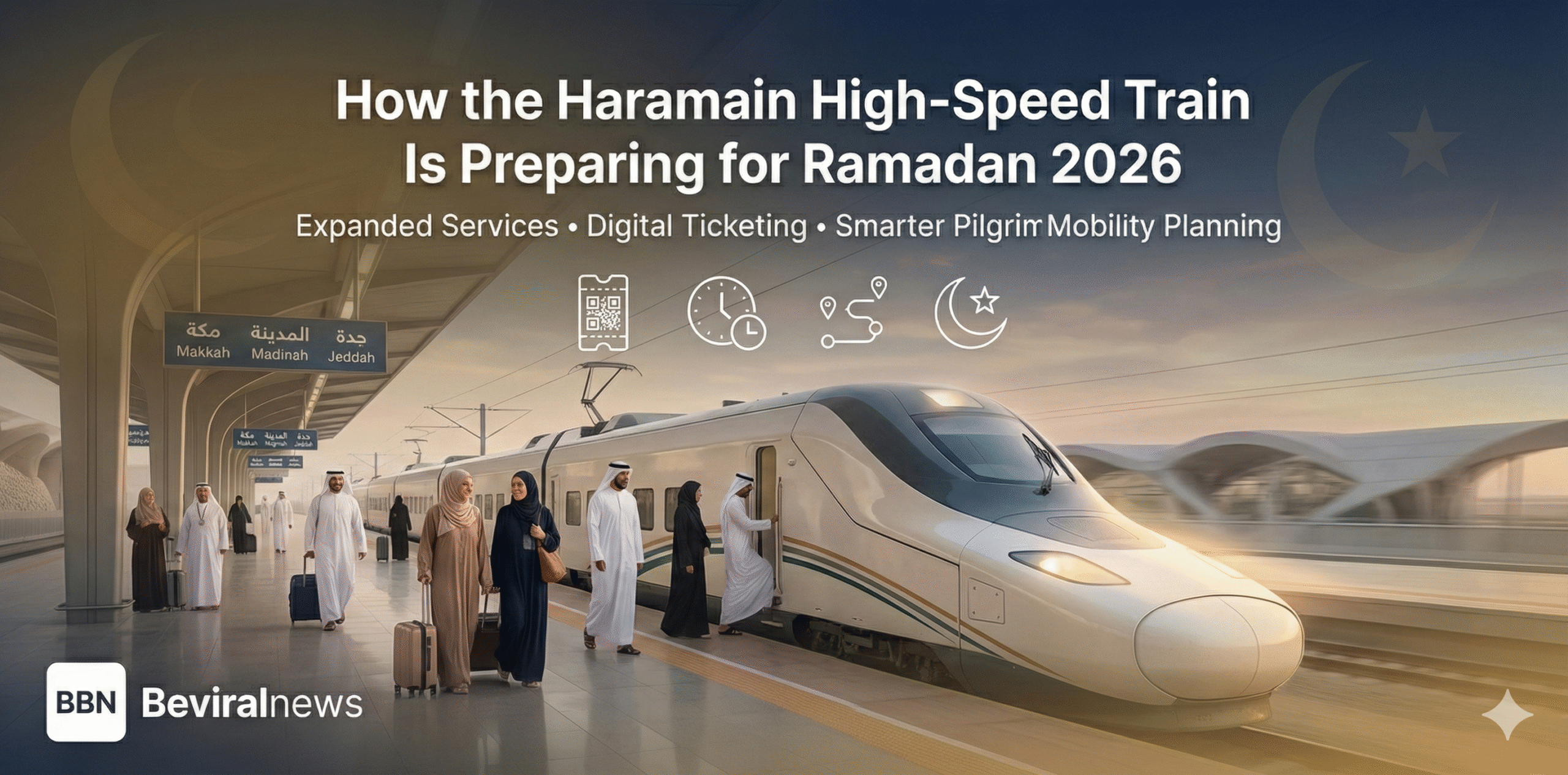
Ramadan travel between the holy cities places extraordinary demand on transport infrastructure, and the Haramain high-speed train Ramadan preparation reflects a deliberate effort to reduce congestion, improve booking access, and protect pilgrims’ time for worship. Anticipated service adjustments and digital upgrades aim to make intercity journeys smoother, but understanding how these changes work in practice helps travelers plan more confidently.
Introduction: Mobility Becomes Part of Worship Logistics
For many pilgrims, Ramadan travel is not merely logistical — it shapes the rhythm of fasting, prayer, and spiritual focus. The journey between Makkah and Madinah often occurs at emotionally meaningful moments: before extended worship periods, after Umrah rites, or around the last ten nights of Ramadan. Transport reliability therefore influences the quality of the experience in ways typical travel articles overlook.
Conventional advice tends to reduce the conversation to booking early or arriving at stations ahead of departure. What often receives less attention is how the underlying system adapts — scheduling adjustments, crowd-flow engineering, or digital queue controls — and how those operational shifts affect traveler decision-making. Understanding these structural preparations reveals when the rail option truly excels, when it becomes constrained, and how pilgrims can navigate peak-demand dynamics with foresight rather than stress.
Why Ramadan Magnifies Pressure on Intercity Mobility
Ramadan reshapes Saudi domestic mobility patterns in predictable but intense ways. Short-distance flights lose appeal due to airport procedures, while highways experience congestion tied to prayer schedules and sunset timing. Rail absorbs a substantial portion of this redirected demand.
The high-speed corridor managed by Saudi Railways Company sits at the center of this shift. Its ability to move passengers between Jeddah, Makkah, and Madinah in hours rather than long road journeys makes it a cornerstone of Ramadan mobility planning within Saudi Arabia.
An often overlooked element is timing compression. Demand spikes occur not just across days but within narrow windows:
- Movement slows before sunset
- Post-iftar travel surges
- Late-night worship periods create irregular passenger waves
These concentrated patterns require dynamic scheduling responses rather than static timetables, shaping how expanded service frameworks are designed and experienced by travelers.
Service Expansion Beyond Simple Frequency Increases
Operational scaling rather than headline numbers
The Haramain train Ramadan schedule 2026 reflects more nuanced planning than simply adding trains. Authorities traditionally scale capacity through layered measures:
- Increasing departures during high-demand evening windows
- Extending operating hours into late night cycles
- Running longer trainsets when feasible
- Coordinating arrival slots with prayer patterns
Together, these actions form a Saudi Railways Ramadan capacity increase focused on flow continuity rather than headline figures.
For travelers, this means availability rarely distributes evenly. Midday trains may remain accessible while post-evening prayer departures fill quickly. Choosing less symbolically timed journeys can significantly reduce fatigue and boarding stress — an insight often missed in simplified travel advice.
Infrastructure resilience considerations
Expansion also places strain on infrastructure. High temperatures, intense usage cycles, and station throughput pressures introduce constraints. Maintenance windows shrink, and contingency planning becomes essential.
This introduces a realistic tradeoff: increased accessibility may slightly elevate exposure to minor delays. Experienced planners account for this by building buffers into itineraries rather than assuming perfect precision, especially during peak Ramadan weeks.
The Makkah–Madinah Corridor During Ramadan Nights
Travel on the Makkah to Madinah high-speed train during Ramadan often occurs after evening prayers, and nighttime conditions shape passenger behavior and comfort.
These journeys frequently involve:
- Larger group travel
- Increased luggage volumes
- Physical fatigue from extended worship
Cabin dynamics differ from standard daytime travel. Seating arrangements and proximity to luggage storage become more significant considerations.
An overlooked factor is physiological strain. Fasting, altered sleep patterns, and crowded terminals can amplify exhaustion. Departures shortly after breaking the fast often provide greater comfort than those scheduled close to pre-dawn meals, improving alertness during boarding and arrival.
Digital Ticketing Evolution and Access Equity
Smarter booking ecosystems
Digital ticketing has evolved into both convenience and demand-management infrastructure. Enhanced mobile platforms increasingly support:
- Real-time seat mapping
- Predictive crowd indicators
- Multilingual navigation
- Expanded international payment compatibility
These developments reduce dependency on intermediaries and give overseas travelers more control over itinerary adjustments.
The overlooked equity challenge
However, digital progress introduces accessibility considerations. Travelers unfamiliar with mobile booking environments may encounter friction, prompting continued reliance on agencies or group coordinators.
This dynamic reshapes booking strategy. Independent digital control offers flexibility, while coordinated booking provides reassurance and language support. The most suitable approach depends on traveler confidence and group complexity rather than technological availability alone.
Ticket Booking Judgement: Timing, Flexibility, and Realistic Expectations
Haramain train ticket booking tips Ramadan often emphasize speed, yet measured planning can be equally valuable. Securing early reservations ensures choice, but monitoring later inventory releases occasionally reveals improved options.
Balanced strategies commonly include:
- Early booking for last-ten-night travel
- Flexible selection during early Ramadan
- Preference for weekday journeys
- Evaluating seat position relative to luggage needs
A misconception worth correcting is the assumption that the earliest departure guarantees the smoothest experience. Extremely early travel may collide with fatigue from night worship, creating avoidable stress. Aligning departure times with personal energy cycles often yields better outcomes.
Crowd Management Architecture Beyond the Platform
HHR crowd management and travel planning extends beyond boarding procedures. Station architecture, staff deployment, and passenger routing combine to regulate density.
Typical approaches include:
- Zoned waiting areas
- Timed gate access
- Directional routing
- Multilingual assistance teams
Such measures prioritize stability of passenger flow. Structured queue pacing may appear restrictive, yet it often improves overall throughput. Recognizing this intent helps travelers interpret station procedures more constructively and manage expectations.
Intermodal Coordination and the Wider Transport Ecosystem
Rail operations intersect with buses, air arrivals, and urban transit networks. Coordinated scheduling supports smoother integration between transport modes.
This ecosystem perspective highlights an important planning insight: isolated itinerary design increases disruption risk. Aligning flight arrival buffers with train departures improves reliability. Travel planners increasingly treat transport as an integrated system rather than separate bookings, strengthening resilience during high-demand seasons.
When Rail Is Not the Ideal Choice
Balanced evaluation acknowledges situations where alternatives may serve better:
- Travelers with extensive cargo
- Groups requiring continuous door-to-door support
- Individuals needing mobility assistance
Road transport or charter options sometimes offer greater adaptability despite longer travel times. The high-speed rail option excels in speed and predictability, yet suitability depends on group structure and logistical needs.
Frequently Asked Questions
Does the Haramain train usually run more frequently during Ramadan?
Yes — service levels typically expand. Adjustments concentrate on peak demand periods rather than uniformly increasing all departures, so timing strongly affects availability.
Is night travel between Makkah and Madinah crowded?
Often yes. Evening and late-night travel aligns with worship schedules, producing higher occupancy. Selecting slightly offset times may improve comfort.
Are digital tickets practical for international pilgrims?
Generally yes. Multilingual support and global payment compatibility simplify access, though agency assistance may benefit travelers unfamiliar with app-based booking.
How early should tickets be secured for late Ramadan travel?
Several weeks in advance is advisable. Demand surges significantly during the final ten nights, and early booking preserves flexibility.
Does added capacity remove the risk of delays?
No. Expanded service improves movement but does not eliminate operational variables. Time buffers remain prudent for important connections.
Conclusion: Understanding the System Strengthens the Journey
Ramadan mobility between the holy cities reflects more than transport logistics; it reveals the interaction between infrastructure scaling, digital access, and human rhythms shaped by faith practices. High-speed rail developments demonstrate increasing attention to worship patterns, traveler diversity, and international accessibility.
Viewing transport planning as part of pilgrimage preparation — rather than an afterthought — enables more confident and comfortable journeys. Thoughtful timing, realistic expectations, and awareness of system dynamics often transform travel from a source of uncertainty into a seamless extension of the spiritual experience.
Haramain High-Speed Train