
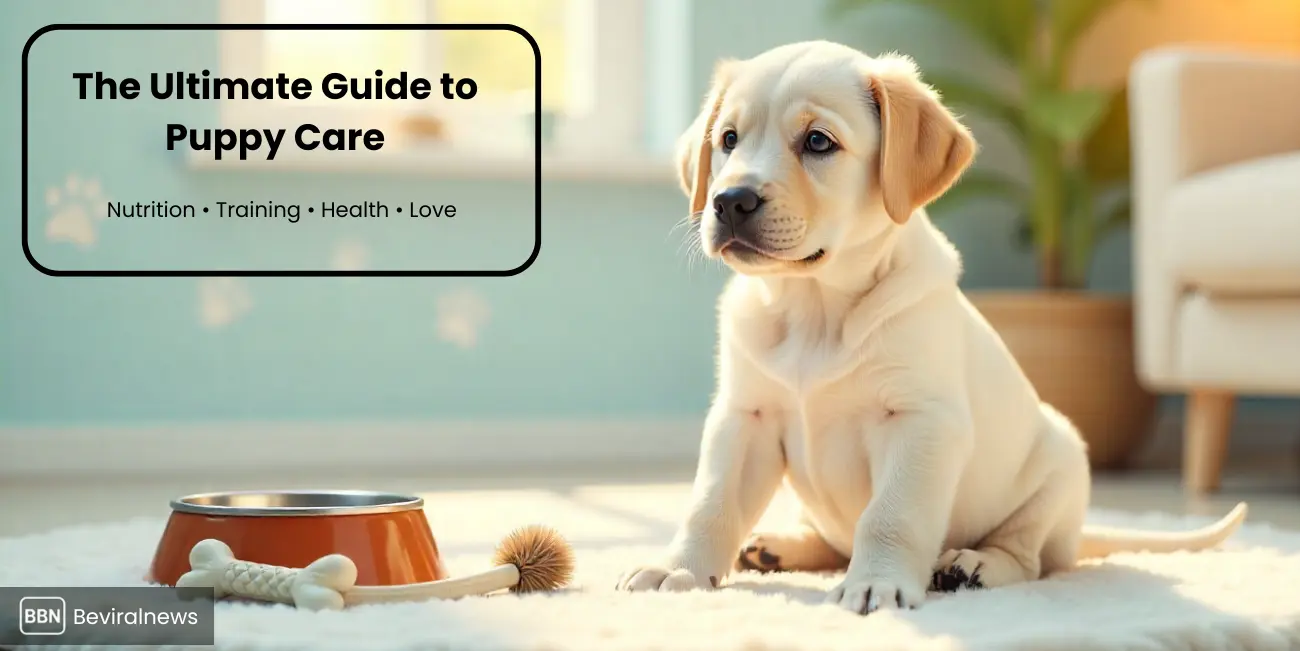
“The Ultimate Guide to Puppy Care” may seem overwhelming at first, but with the right steps and mindset, you can raise a healthy, happy pup in a smart and manageable way.
What Is Puppy Care?
When you bring home a puppy, you commit to caring for a tiny, curious new family member who depends on you for food, safety, training, and love. Puppy care means fulfilling their physical, mental, and emotional needs through each stage of growth.
Key components of puppy care include:
- Balanced nutrition
- Vaccinations and preventive health
- House training and behavior education
- Socialization and exposure to new environments
- Grooming, hygiene, and dental care
- A safe, enriched environment
Get these fundamentals right, and many of the headaches later on will be much easier to manage.
✅ Step-by-Step Puppy Care Roadmap
Here’s a structured path to follow when caring for a puppy — from day one through the early months.
1. Preparation & Puppy-Proofing
- Select a trustworthy breeder or adoption center (avoid places with poor hygiene or questionable practices).
- Puppy-proof your home: tuck away electrical cords, secure toxic plants, block off small crevices where a pup could get stuck.
- Set up a comfortable space for rest (crates or beds in quiet corners).
- Gather essential supplies:
- Durable food and water bowls
- Quality puppy food
- Collar, leash, ID tag
- Safe toys and chew items
- Grooming kit (brush, nail clippers, ear cleaner)
- Cleaning supplies (enzymatic, pet-safe cleaners)
- A vet’s contact information
- Durable food and water bowls
2. First Days & Settling In
- Schedule a vet checkup within the first few days to assess health, begin vaccination, and perform stool tests.
- Keep the puppy’s diet consistent—avoid sudden changes in food.
- Begin crate training early: make the crate a positive place, feed inside it, and slowly increase the time the door is closed.
- Start potty training immediately:
- Take the pup outside every 20–30 minutes (especially after eating, sleeping, playing)
- Use the same door and spot each time
- Praise or reward successes
- Don’t punish mistakes—clean carefully and reset
- Take the pup outside every 20–30 minutes (especially after eating, sleeping, playing)
- Introduce basic commands like “sit,” “come,” “down” using gentle, short training sessions.
3. Health & Preventive Care
- Follow a vaccination schedule suited to your region and puppy’s breed.
- Deworming must begin early (often at just a few weeks old) and continue regularly.
- Use puppy-safe flea, tick, and parasite prevention as your vet recommends.
- Monitor weight and growth; adjust feeding if needed.
- Begin dental care early—get the pup used to brushing.
- Groom regularly: brush the coat, check ears, trim nails.
- Be vigilant for signs of illness: loss of appetite, vomiting, diarrhea, lethargy, unusual behaviors.
4. Nutrition & Feeding
- Puppies need a diet with high-quality protein, vitamins, and minerals tailored for growing dogs.
- Choose a formula appropriate to your pup’s expected adult size (small, medium, large).
- Feeding schedule by age:
- 6–12 weeks: 3–4 meals/day
- 3–6 months: 3 meals/day
- 6+ months (depending on breed): 2 meals/day for many breeds
- Transition to adult food based on your veterinarian’s advice
- 6–12 weeks: 3–4 meals/day
- Avoid overfeeding—excess weight burdens developing joints.
5. Socialization & Behavior
- The window of 8–16 weeks is crucial: expose your puppy to people, other pets, sounds, and new environments in a positive, controlled way.
- Enroll in puppy classes or organize supervised playdates.
- Handle their paws, ears, mouth gently so they become comfortable with grooming and vet visits.
- Redirect unwanted chewing or biting to approved chew toys.
- Stick to positive reinforcement methods: praise, treats, consistent cues.
6. Exercise & Rest
- Puppies alternate intense play with needing lots of sleep—they can’t sustain long periods of activity.
- Especially for large-breed puppies, avoid overly strenuous or long exercise that might stress developing bones and joints.
- After vaccinations, start short walks; gradually increase duration.
- Always supply fresh water and a shady, safe place to rest.
7. Advanced Tips (For More Experienced Caregivers)
- Breed-Specific Concerns: Investigate health risks common to your puppy’s breed (e.g. hip dysplasia, coat issues).
- Cognitive Enrichment: Use puzzle toys, scent games, and training challenges to engage their minds.
- Normalize New Experiences: Make grooming, travel, vet visits routine and rewarding to reduce anxiety later on.
- Growth Monitoring: For giant or large breeds, track joint development and avoid excessive supplementation.
- First Aid Knowledge: Learn basic puppy first aid, and keep contact info for emergency veterinary services.
🐾 A Real Puppy Story: “Charlie’s Early Journey”
When Aisha adopted Charlie, a 10-week-old Labrador mix, she knew there’d be challenges. On night one, Charlie whined in the crate. Rather than giving in to the noise, Aisha waited until he calmed, then quietly praised him. Within two nights, the crying eased.
Charlie had his first accident in the house right after dinner. Aisha cleaned up calmly, then immediately brought him outside, saying “Go potty” and rewarding him when he did. Within days, he began going outdoors consistently.
When teething started around week 12, Charlie chewed pillows and shoes. Aisha redirected him to safe chew toys and supervised play more closely. Gradually, his mouthing became gentle, and he learned acceptable chew items.
She enrolled Charlie in puppy class, introduced him to new places and people, and adhered to his vaccination and feeding schedule. Over time, he grew into a confident dog—friendly, well behaved, and healthy.
🔍 FAQs (People Also Ask)
How often should you feed a puppy?
3–4 meals per day when young, transitioning to 2 meals daily as they mature.
When can a puppy go outside safely?
Once core vaccinations are in place, usually after the first vaccine series.
Why does my puppy bite so much?
Teething and exploration drive biting; redirect the behavior using appropriate chew toys.
When should I spay or neuter my puppy?
Commonly between 6–12 months, but timing depends on breed and vet advice.
What foods are toxic to puppies?
Chocolate, grapes, raisins, onions, garlic, xylitol, caffeine, and some human foods harmful to dogs.
Conclusion
Caring for a puppy isn’t always easy, but with patience, consistency, and knowledge, you can shape a well-rounded, happy dog. Use this guide as your foundation. Begin implementing one area at a time—crate training, potty training, socialization, etc.—and adjust as necessary.
Your next move: book your puppy’s vet appointment (if you haven’t), draft a training and vaccination timeline, and embrace the journey. Remember, every moment—tiny victories and setbacks alike—builds a deeper bond between you and your puppy.
If you’d like help choosing the right food, training techniques for your breed, or product suggestions (toys, crates, grooming kits), let me know—I’m here to help every step of the way.