
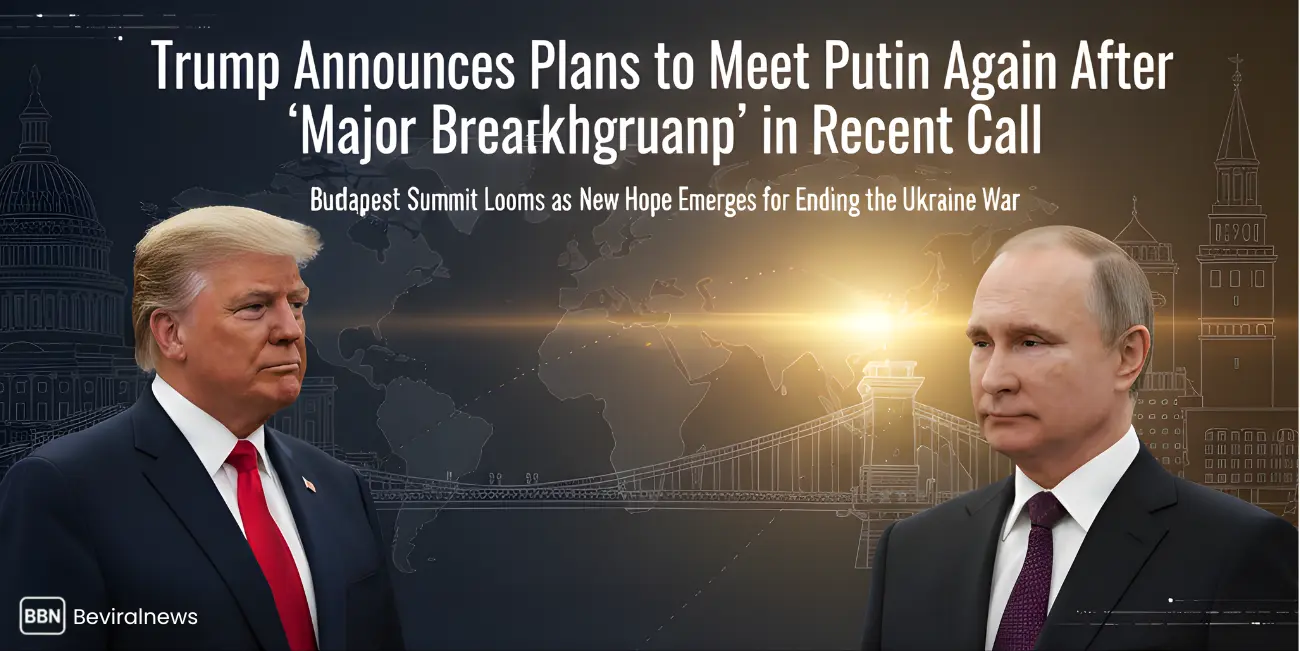
Trump Announces Plans to Meet Putin Again After ‘Major Breakthrough’ in Recent Call may seem like a daunting geopolitical puzzle, but with the right breakdown of events and context, you can grasp its potential impact on global peace in a straightforward and insightful way.
In the ever-shifting landscape of international relations, few developments capture global attention like a high-stakes dialogue between world leaders. On October 16, 2025, U.S. President Donald Trump announced his intention to meet Russian President Vladimir Putin once more, following what he described as a “major breakthrough” in a recent phone call. This move comes amid ongoing efforts to resolve the protracted Ukraine war, now nearing its fourth year since Russia’s invasion in February 2022. If you’re new to this topic, don’t worry—we’ll start with the basics and build up to deeper insights, complete with real-world examples and practical breakdowns to make it all digestible.
This announcement isn’t just headline fodder; it signals a potential shift in U.S.-Russia relations and could pave the way for meaningful peace negotiations. Trump, fresh from brokering a fragile ceasefire in the Middle East between Israel and Hamas, expressed optimism about applying similar diplomatic momentum to Ukraine. Let’s dive in and unpack what this means for everyone from casual news followers to policy enthusiasts.
What Happened in the Recent Call Between Trump and Putin?
Let’s start with the fundamentals for those who might be catching up on global news. On Thursday, October 16, 2025, President Trump engaged in a lengthy phone call with President Putin—lasting over two hours, according to White House sources. This wasn’t a casual chat; it was a strategic discussion aimed at ending the war in Ukraine, as Trump put it.
During the call, several key topics emerged. Firstly, Putin congratulated Trump on the recent progress in Middle East peace, particularly the Israel-Hamas ceasefire that has held steady. Trump believes this success could spill over into resolving the Ukraine conflict. They also touched on future trade opportunities between the U.S. and Russia once the war ends, highlighting economic incentives for peace. Additionally, Putin extended thanks to First Lady Melania Trump for her efforts in supporting children affected by the conflict, adding a personal touch to the diplomacy.
The call involved key U.S. figures like Vice President JD Vance and Secretary of State Marco Rubio, underscoring its high-level nature. White House spokesperson Karoline Leavitt described it as “very good and productive,” noting that “great progress was made.” This breakthrough led directly to plans for an in-person meeting in Budapest, Hungary—no date set yet, but it’s framed as “very likely.” For beginners, think of this as two CEOs negotiating a merger after a promising video call: the groundwork is laid, but the real deal happens face-to-face.
Why Choose Budapest for the Trump-Putin Meeting?
Moving beyond the basics, let’s explore why Budapest was selected as the venue. Hungary, under Prime Minister Viktor Orbán, has maintained relatively warm ties with Russia despite being a NATO and EU member. This makes it a neutral-ish ground for sensitive talks, similar to how Switzerland often hosts international summits. Trump mentioned Budapest, emphasizing its role in facilitating discussions to end the Ukraine war.
From an advanced perspective, this choice reflects strategic semantics. Hungary’s pro-Russia stance could ease Putin’s participation, while still being in Europe—close to Ukraine—to signal inclusivity. However, critics argue it might undermine EU unity, as Hungary has blocked aid to Kyiv in the past. Real-life anecdote: Recall the 2018 Helsinki summit between Trump and Putin, where neutral Finland hosted amid controversy over election interference. That meeting didn’t resolve issues but set precedents for direct leader-to-leader engagement. Similarly, Budapest could be a low-pressure spot for breakthroughs, but success hinges on follow-through.
In addition, high-level staff meetings between U.S. and Russian advisors are slated for next week, potentially in Hungary, led by Rubio on the American side. This step-by-step prelude ensures agendas are aligned before the presidents meet, reducing risks of failure.
Timeline of Events Leading to This Announcement
To make this easier to follow, here’s a step-by-step timeline of recent developments—perfect for visualizing the buildup:
- August 2025: Alaska Summit – Trump and Putin meet in Alaska for talks on Ukraine, but no major breakthrough occurs. They hold a joint press conference, with Trump calling it “a very productive discussion.”
- Early October 2025: Middle East Progress – Trump brokers a ceasefire in Gaza, boosting his diplomatic credentials. He links this to Ukraine, stating that progress in one region fuels momentum in another.
- October 16, 2025: The Phone Call – Over two hours long, involving congratulations, trade talks, and child welfare mentions. Trump announces “great progress.”
- October 17, 2025: Zelenskyy Meeting – Trump hosts Ukrainian President Volodymyr Zelenskyy at the White House to discuss Tomahawk missiles and sanctions.
- Next Week: Advisor Talks – U.S.-Russia meetings to prep for the Budapest summit.
- TBD: Budapest Meeting – The main event to push for peace.
This chronology shows how diplomacy builds incrementally, much like constructing a bridge—one support at a time.
Geopolitical Implications for the Ukraine War
For more experienced readers, let’s delve into the advanced insights. This announcement could reshape the Russia-Ukraine conflict, which has claimed countless lives and disrupted global economies. Trump’s strategy combines carrots (trade promises) and sticks (potential Tomahawk sales to Ukraine, with a 995-mile range that could strike deep into Russia). Zelenskyy is pushing for these weapons to gain leverage, arguing they’d force Putin to negotiate seriously.
Economically, Trump is ramping up pressure: India has agreed to halt Russian oil purchases, and pending U.S. legislation could impose tariffs on Russian exports. Analyst Mark Montgomery notes that while Tomahawks are a big step, shorter-range options like ERAM missiles could provide quicker impact. However, Putin has called such arms supplies a “red line,” risking escalation.
In broader terms, this fits Trump’s “America First” approach, prioritizing quick resolutions over prolonged aid. Real-life parallel: The 2019 Trump-Kim Jong Un summits aimed at denuclearization—high hopes, mixed results. Here, success could bolster Trump’s legacy, but failure might prolong the war, affecting energy prices and global security. Therefore, stakeholders like NATO allies must align, as Treasury Secretary Scott Bessent emphasized Europe’s role in sanctions.
Historical Context: Past Trump-Putin Interactions
To keep things engaging, consider some real-life anecdotes from history. Trump’s relationship with Putin dates back to his first term, with notable meetings like the 2017 Hamburg G20 sideline chat and the infamous 2018 Helsinki summit. In Helsinki, Trump faced backlash for appearing to side with Putin on election meddling, but it highlighted their direct communication style.
Fast-forward to 2025: The August Alaska meeting focused on Ukraine but stalled. Now, with Middle East wins under his belt, Trump seems more confident. These interactions build trust—or at least familiarity—which experts say is crucial for breakthroughs. As one analyst put it, “Diplomacy is personal; leaders like Trump thrive on it.”
Potential Outcomes and Challenges Ahead
Finally, what could happen next? Here’s a step-by-step guide to possible scenarios:
- Step 1: Prep Meetings Succeed – Advisors iron out terms, leading to a Budapest agenda focused on ceasefires and territorial concessions.
- Step 2: Direct Talks – Trump and Putin negotiate, possibly involving Zelenskyy remotely. Leavitt hinted at a Putin-Zelenskyy meeting as “possible.”
- Step 3: Implementation – If agreed, economic sanctions lift gradually, with monitoring by international bodies like the United Nations.
Challenges include Russian red lines on arms and Ukraine’s insistence on full sovereignty. However, with Trump’s track record in Gaza, there’s optimism. In addition, public support matters—polls show Americans favor ending the war swiftly.
FAQs
When is the Trump-Putin meeting in Budapest scheduled?
No specific date has been set yet, but it’s expected soon following advisor talks next week.
What was discussed in the Trump-Putin phone call?
Topics included Middle East peace congratulations, future trade, child welfare efforts by Melania Trump, and ending the Ukraine war. Great progress was reported.
Why is Trump meeting Zelenskyy first?
To discuss U.S. support, including Tomahawk missiles and sanctions, before engaging Putin fully. It’s part of balancing both sides.
Could this lead to peace in Ukraine?
It’s possible, but challenges like arms red lines and territorial disputes remain. Analysts see it as a positive step.
How does the Middle East factor in?
Trump links Gaza success to Ukraine momentum, using it as leverage in talks.
Conclusion
In summary, Trump’s announcement to meet Putin again after a breakthrough call represents a bold, timely push toward resolving the Ukraine crisis. By blending diplomacy, economic pressure, and personal rapport, this could mark a turning point—much like historical summits that reshaped the world. While uncertainties linger, the structured approach builds confidence in potential outcomes.
Ready to stay ahead on global events? Sign up for our free newsletter today for exclusive insights, updates, and expert analysis delivered straight to your inbox. Don’t miss out—join thousands of informed readers and take the next step toward understanding our world better.