
Short Summary
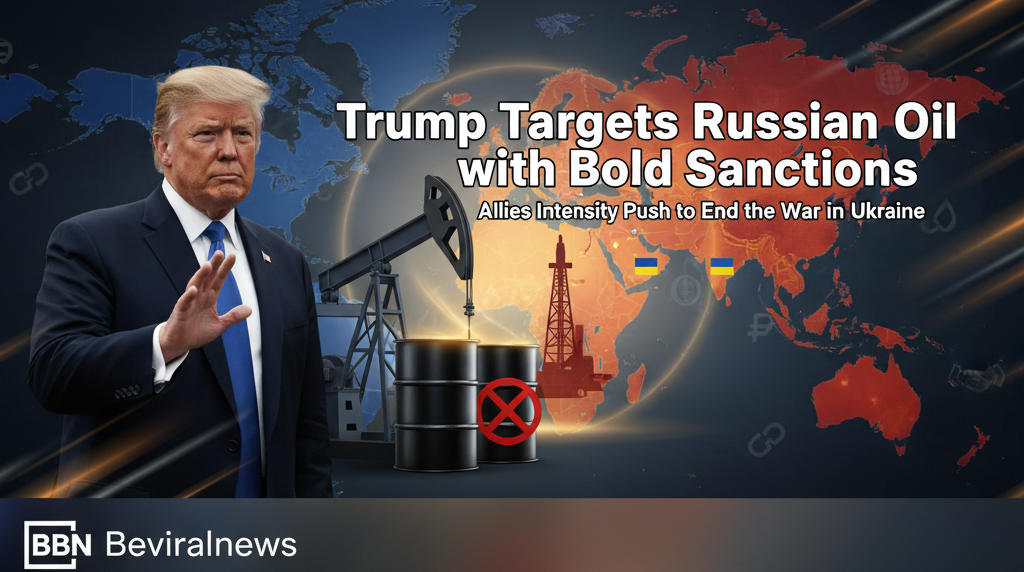
The decision by Donald Trump to impose bold sanctions targeting Russian oil while allies intensify efforts to end the Ukraine war may seem overwhelming, yet with clear steps and coordinated action it becomes understandable how this strategy might move the conflict toward a resolution.
What is going on?
The U.S. leader has launched sweeping measures aimed at major Russian oil companies and at countries that purchase Russian oil. The goal: to cut off a key revenue stream funding the war in Ukraine. At the same time, many allied nations are stepping up their own pressure, linking energy policy with the drive for peace.
In essence, the idea is: if Moscow cannot profit from oil exports, it loses some of the financial capacity to wage war. And if buyers cease or reduce imports of Russian crude, the pressure increases.
Why now? (Context & background)
The link between oil and war
Russia’s energy sector—especially oil and gas—remains a linchpin of its economy and military spending. Cutting revenues can translate into weakening Moscow’s ability to sustain operations.
A shift in strategy
Rather than relying only on previous sanctions and diplomatic efforts, this move signals a more aggressive economic push. The focus is not just on Russia but also on the countries and firms that enable its energy trade.
International coordination
For sanctions against Russian oil to work effectively, global cooperation is key. Allies must align, trade routes must tighten, and enforcement must be real. A fractured or partial approach threatens to dilute the effect.
What are the potential impacts — and limitations?
Likely outcomes
- Revenue squeeze: Major oil exporters in Russia may see reduced business, raising operational costs, reducing profits, and hindering investment in new fields.
- Market ripple effects: Disruptions in oil flows may cause global price hikes, supply shifts, or temporary energy insecurity in some markets.
- Diplomatic leverage: A strong economic push can alter Moscow’s cost-benefit analysis about staying in conflict versus negotiating a peace deal.
Key challenges & caveats
- Russia’s adaptability: Russia has been rerouting exports toward non-Western buyers (e.g., Asia), using discounted sales, and employing shipping/insurance work-arounds.
- Secondary effects & blowback: If major buyers continue importing Russian oil unimpeded, the sanctions may have limited bite. Meanwhile, allies and consumers may absorb higher energy costs.
- Enforcement burden: Sanctions must be actively enforced with monitoring, penalization of rule-breakers, and closing of loopholes—a difficult task across global supply chains.
- Will it guarantee peace? No. Economic pressure builds influence but does not ensure a deal-making counterpart or willingness from all sides to compromise.
Strategic take-aways for seasoned observers
- Watch for enforcement signals: Are trading firms, banks and shipping companies being sanctioned? Are insurance/logistics paths being cut off?
- Track buyer behavior: Are large importers of Russian oil reducing volumes? Are shifts toward alternative sources happening?
- Observe market and economic reactions: Changes in oil price trends, changes in Russian export volume, and reactions from major energy-consuming nations.
- Consider diplomatic openings: Does Moscow respond with willingness to negotiate, or dig in further? Does Ukraine or its allies adjust their approach?
- Be mindful of allied balance: Sanctions work better when many players align—divergences (e.g., between major buyers) may weaken the strategy.
What happens next? (Step-by-step guide)
- Initial reactions
- Russia responds diplomatically (maybe condemnation, counter-measures)
- Markets respond: oil prices, trading volumes, shipping routes may shift
- Russia responds diplomatically (maybe condemnation, counter-measures)
- Allied coordination kicks in
- The U.S. and its partners encourage or compel major buyers of Russian oil to cut purchases
- Secondary sanctions or tariff threats may be expanded to third-party nations/importers
- The U.S. and its partners encourage or compel major buyers of Russian oil to cut purchases
- Monitoring and enforcement
- Look at export data: Russian crude volumes, direction of exports, price discounts
- Enforcement actions: sanctions on intermediaries, shipping, insurers, financiers
- Look at export data: Russian crude volumes, direction of exports, price discounts
- Negotiation leverage window
- With economic pressure mounting, diplomatic efforts toward cease-fire/peace may intensify
- The conflict parties (Russia, Ukraine, allies) may explore adjusted terms or new proposals
- With economic pressure mounting, diplomatic efforts toward cease-fire/peace may intensify
- Recalibration and follow-through
- If sanctions work and Russia shows flexibility, sanctions might be eased conditionally
- If little change occurs, the economic push could escalate or shift branches (e.g., broader energy sector moves)
- If sanctions work and Russia shows flexibility, sanctions might be eased conditionally
- Secondary & unintended outcomes
- Higher energy prices, inflation risks, consumer pain in allied countries
- Possible retaliation by Russia (energy cut-offs, alternate supply channels, global trade shifts)
- Longer-term shifts in global energy architecture (buyers seeking less dependence on adversarial producers)
- Higher energy prices, inflation risks, consumer pain in allied countries
Real-life example
An illustrative case: A major buyer in Asia, which relied heavily on discounted Russian crude, faced heightened pressure due to threats of tariffs or reduced trade access. That buyer began reassessing its import portfolio and exploring alternative suppliers. Meanwhile, Russia had to reconsider whether the continuing discounted sales were worth the reputational and legal risk.
On the political front, officials in Ukraine welcomed the sanctions as a sign of stronger international resolve—but stressed that the war’s end still depends on Russia’s willingness to engage seriously in talks.
Why this matters to you
- Global ripple effects: Changes in how major economies restrict or follow Russian oil policy can affect energy prices, investment decisions, and trade flows globally.
- Geopolitical stakes: What happens here signals more than one war—it might shape the blueprint for how major powers use economic tools to influence conflicts.
- Business implications: If you’re in energy markets, trade or geopolitics, the shift could mean risk, opportunity, or the need to re-think strategy.
- Public interest: For everyday citizens, this is about how governments attempt to end wars without purely military means—how economics, diplomacy and alliances interplay.
- Precedent setting: If the strategy succeeds—or fails—it will influence how future sanctions are designed, and how energy-trade becomes a tool of foreign policy.
FAQs
Q1: What exactly are the sanctions targeting Russian oil?
Short answer: The measures designate major Russian oil firms, restrict transactions with them, and aim to reduce Russia’s ability to export oil and earn revenue from those exports.
Expanded: They include asset freezes of companies, bans on U.S. persons transacting with them, restrictions on servicing/trading and encouragement for allies to join in enforcement.
Q2: Will these sanctions end the war in Ukraine right away?
Short answer: No, they are a pressure tool rather than a guarantee of peace.
Expanded: They increase incentives for Russia to negotiate, but whether that leads to an acceptable peace depends on many other variables: war-strategy, national goals, alliance behaviour, and Russia’s reaction.
Q3: How do these actions affect other countries that buy Russian oil?
Short answer: Countries importing Russian oil face the risk of being targeted via tariffs or secondary sanctions if they don’t reduce purchases.
Expanded: Importers must weigh energy security, cost, and international relations. Some may comply, others may resist, which affects how strong the sanctions’ effect becomes.
Q4: Do these sanctions only hurt Russia?
Short answer: No — allied and buyer countries can also feel the impact.
Expanded: Disruptions in global supply can raise energy costs, impact inflation, and cause trade/risk challenges for companies and governments.
Q5: What will make these sanctions effective?
Short answer: Enforcement, allied buy-in, and reducing Russia’s ability to evade measures.
Expanded: That means tracking shipping, insuring/logistics, closing loopholes, sanctioning intermediaries and coordinating internationally
Conclusion
The latest sanctions on Russian oil by the U.S., combined with an intensified push by allies to end the war in Ukraine, represent an important shift in how economic tools are being used in global conflict. While these measures don’t guarantee an immediate peace, they move the dial on pressure and open new avenues for diplomacy and negotiation.
If you’re watching global affairs, energy markets, or trade policy, now is the time to stay informed. Monitor enforcement actions, global buyer behaviour, and diplomatic signals closely.
Take action: sign up for trusted geopolitical or energy-market briefings, review your business exposure to shifting trade/energy flows, and prepare for potential ripple-effects. Staying ahead means being prepared—and this moment is one where preparedness matters.