
Summary:
Why Trump wanted Greenland comes down to long-term U.S. security, Arctic dominance, and blocking rivals like China and Russia.
The proposal was less about real estate and more about controlling future military routes, resources, and influence.
Understanding this explains how U.S. power strategy is shifting north.
Why This Matters
Many people dismissed the idea as a political stunt or personal impulse. That reaction missed the deeper context.
U.S. foreign policy has increasingly moved toward preventive positioning, especially in regions opening up due to climate change.
Greenland sits at the center of that shift.
This guide explains exactly what works, what doesn’t, and how to choose correctly.
Greenland’s Strategic Location Is the Core Reason
The Arctic Is Becoming a New Power Corridor
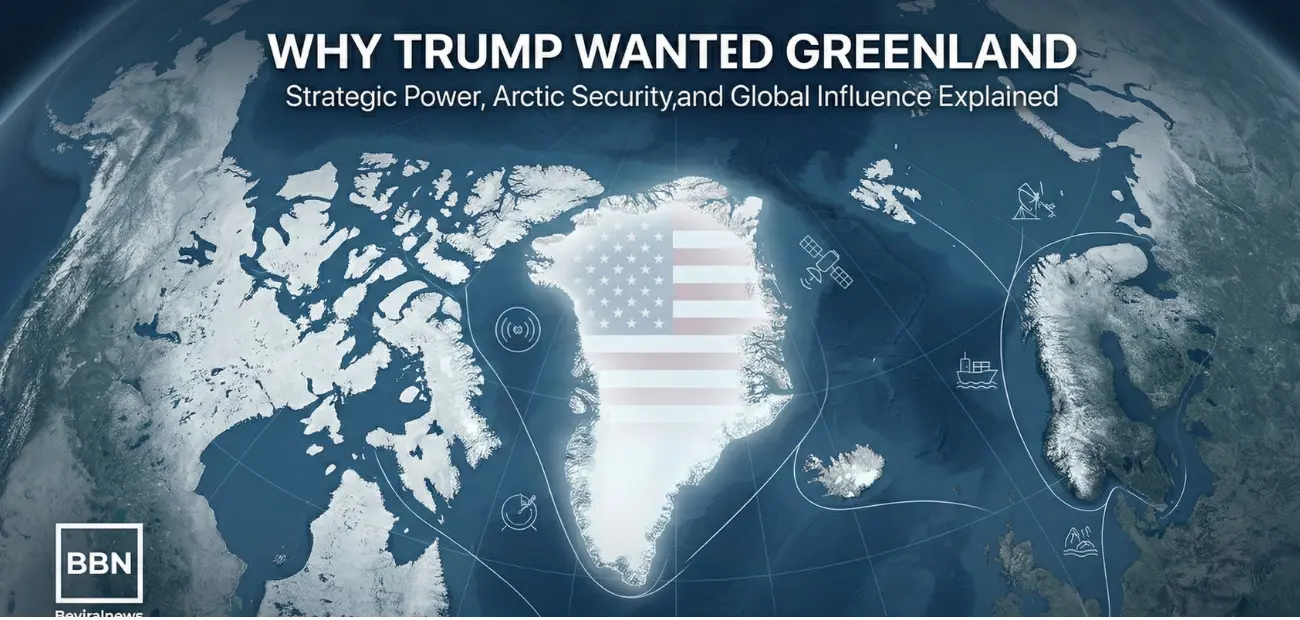
In real-world military planning, geography still decides outcomes. Greenland lies between North America and Europe, directly on key Arctic air and naval routes.
As ice melts, these routes become faster, cheaper, and militarily exposed.
For U.S. defense planners, that makes Greenland less remote and more critical.
A common misunderstanding is that the Arctic is still “future tense.” It isn’t. It is already active.
Why the U.S. Military Already Operates There
The U.S. has maintained a continuous presence at Thule Air Base, now known as Pituffik Space Base, for decades.
That base supports missile warning systems and space surveillance tied to North American defense.
This is where Greenland geopolitical importance becomes concrete, not theoretical.
Decision filter:
This argument matters to readers interested in security policy and NATO defense, not those focused only on short-term economics.
U.S. Interest in Greenland Strategy Was About China and Russia
Blocking Rival Expansion Without Direct Conflict
Both China and Russia have expanded Arctic investments quietly.
China labels itself a “near-Arctic state.” Russia has rebuilt Arctic bases and icebreaker fleets.
From a U.S. perspective, buying influence later is far more expensive than securing access early.
Most users miss this point: the proposal wasn’t reactive. It was preemptive.
Greenland as a Buffer Zone
If Greenland aligns economically or politically with rival powers, U.S. leverage weakens across the North Atlantic.
Control does not always mean ownership, but ownership guarantees control.
This is why greenland us china russia influence became a serious internal discussion, not a media joke.
Limitation:
Ownership would not automatically remove Chinese or Russian interest. It would only raise the cost of their involvement.
Arctic Resources and U.S. Security Concerns
Rare Earths, Minerals, and Energy Potential
Greenland holds untapped reserves of rare earth elements, uranium, and possibly oil and gas.
These materials matter because supply chains increasingly determine national security.
In real-world use, the U.S. depends heavily on Chinese rare earth processing. That is a vulnerability.
Securing alternative sources is not optional anymore.
Why Resources Alone Weren’t Enough
A common mistake is assuming the proposal was resource-driven first.
Extraction in Greenland is expensive, slow, and politically sensitive.
The strategic value came before the economic upside.
Who this matters for:
Readers interested in arctic resources and us security, not speculative mining profits.
The Denmark Factor: Why Buying Greenland Was Politically Unrealistic
Greenland Is Not a Free Asset
Greenland is an autonomous territory within the Kingdom of Denmark.
Any sale would require consent from Denmark and Greenland’s own government.
This is where the proposal failed publicly.
Why the Idea Still Made Strategic Sense
Even though the purchase was unrealistic, raising the idea forced allies to confront Arctic security gaps.
It also signaled to rivals that the U.S. considers Greenland non-negotiable strategically.
Most users notice the failure, not the signaling effect.
Warning:
Diplomatic friction with allies can weaken trust, even when strategic logic is sound.
Was This About NATO or Acting Outside It?
Greenland already falls under NATO’s strategic umbrella via Denmark and NATO.
So why not rely on alliances?
Because alliances move slower than threats.
Ownership or direct control reduces dependency on collective decision-making during crises.
When this works:
Rapid-response defense scenarios.
When it doesn’t:
Long-term alliance cohesion and diplomatic goodwill.
Common Mistakes People Make When Interpreting the Proposal
- Treating it as a joke instead of a signal
- Assuming it was about personal legacy
- Ignoring Arctic military timelines
- Overestimating economic motives
The biggest error is separating geopolitics from geography.
They are the same thing.
Who This Strategy Was For — and Who It Wasn’t
This strategy fits:
- Defense-first policymakers
- Long-term security planners
- Arctic-focused geopolitical analysts
This strategy does not fit:
- Short-term economic planners
- Diplomacy-first alliance managers
- Domestic policy-focused leadership
Understanding this mismatch explains the backlash.
FAQ: People Also Ask
Why did Trump want to buy Greenland?
To secure U.S. military and strategic dominance in the Arctic.
Economic resources mattered, but defense positioning came first.
Was the Greenland proposal legal?
Technically possible, politically unrealistic.
It required approval from Denmark and Greenland, which was never likely.
Is Greenland important to U.S. national security?
Yes, increasingly so.
Missile defense, space monitoring, and Arctic routes all depend on it.
Did China or Russia influence the decision?
Indirectly, yes.
Their growing Arctic presence raised urgency within U.S. strategy circles.
Could the U.S. still expand control without buying Greenland?
Yes, through investment, defense agreements, and diplomacy.
Ownership is only one option.
Final Takeaway
The answer to why Trump wanted Greenland is not personality-driven or symbolic. It was a calculated response to shifting Arctic power dynamics, emerging military routes, and rival expansion.
With a clear understanding of how this works, readers can now interpret similar geopolitical moves correctly — without guesswork.